

Common Methods for Metal Particle Conveying
When it comes to the efficient handling and transportation of metal particles in industrial settings, selecting the right conveying method is crucial for optimizing production processes and ensuring material integrity. The choice of method depends on various factors such as particle size, material density, required throughput, and the overall system layout. In this article, we will explore some of the most common methods used for metal particle conveying, providing insights into their operation and applications.
1. Gravity Conveying Systems
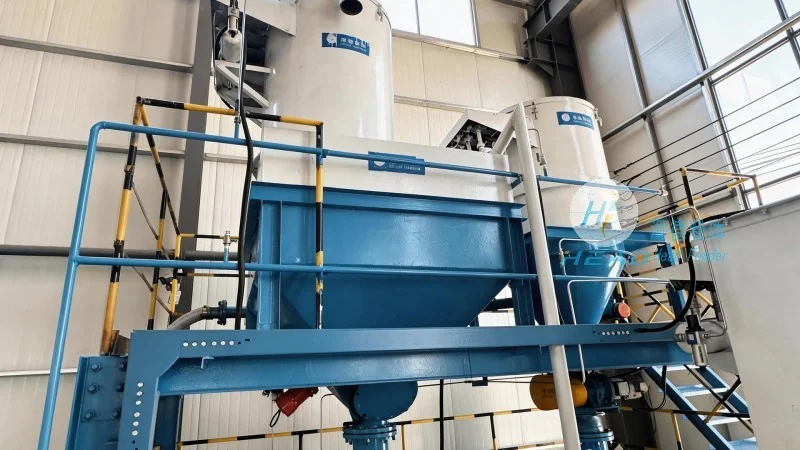
Gravity conveying is a straightforward and cost-effective method that utilizes the natural force of gravity to move metal particles from one point to another. This approach is particularly suitable for materials with a high density and relatively large particle size, as the gravitational pull helps in maintaining a steady flow. The system typically consists of inclined chutes or troughs that guide the particles downward, often combined with a series of hoppers or bins to control the flow rate. One of the key advantages of gravity conveying is its low energy consumption, as it does not require external power sources like motors or pumps. However, it is limited by the need for a suitable slope and the ability to handle only materials that can flow freely without excessive friction or clogging. In industrial applications, gravity conveyors are commonly used in processes like raw material feeding, product discharge, and material transfer between different stages of production.
2. Mechanical Conveying Systems
Mechanical conveying systems employ mechanical components to move metal particles, offering greater control and flexibility compared to gravity methods. These systems are widely used in industries where precise control over flow rate, direction, and speed is essential. The most common types of mechanical conveyors include belt conveyors, screw conveyors, and bucket elevators. Belt conveyors use a continuous belt to transport particles horizontally or at a slight incline, making them ideal for long-distance transportation and bulk material handling. Screw conveyors, on the other hand, utilize a rotating screw or auger to push particles forward, suitable for materials that are less free-flowing or have a tendency to clump together. Bucket elevators are designed to lift particles vertically and then discharge them at a lower level, commonly used in applications where vertical movement is required, such as in flour mills or cement plants. Mechanical conveyors are often equipped with variable speed drives and control systems, allowing operators to adjust the conveying rate based on production demands. This adaptability makes them a versatile choice for various metal particle applications.
3. Pneumatic Conveying Systems
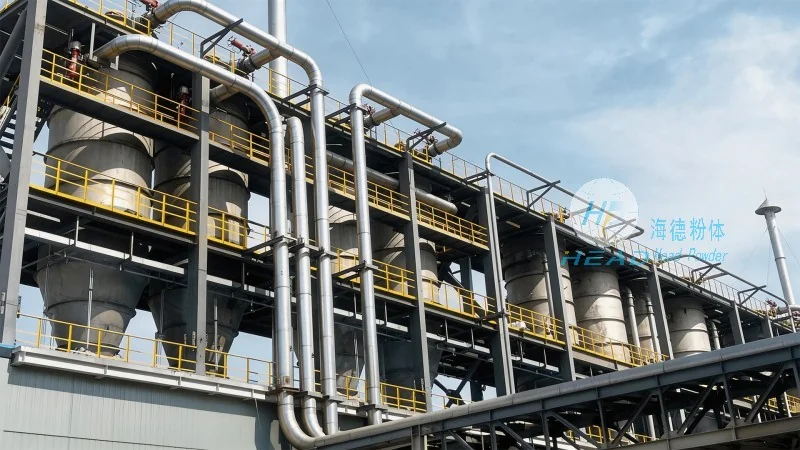
Pneumatic conveying systems use air or other gases to transport metal particles through a pipeline network. This method is particularly advantageous for handling fine or dusty metal powders, as it prevents material contamination and reduces the risk of dust exposure. There are two main types of pneumatic conveyors: dilute-phase and dense-phase. Dilute-phase systems operate at higher air velocities, creating a cloud of particles suspended in the air, which is suitable for short to medium-distance transport and low to medium particle loads. Dense-phase systems, conversely, operate at lower air velocities, where particles are conveyed in a slurry-like state, allowing for higher material loads and longer distances. Pneumatic conveying is often preferred in applications where the material is sensitive to moisture or requires a dust-free environment, such as in pharmaceutical or food processing industries. However, it is important to note that pneumatic systems require proper air filtration and pressure control to ensure efficient operation and prevent system blockages. The choice between dilute and dense-phase depends on the specific characteristics of the metal particles and the operational requirements of the plant.
4. Hydraulic Conveying Systems
Hydraulic conveying systems utilize water or other liquids to transport metal particles, typically in a slurry form. This method is commonly used in mining and mineral processing industries where large volumes of ore or rock need to be moved over long distances. The system works by pumping a slurry of particles and water through a pipeline, with the water providing the necessary hydraulic pressure to move the material. Hydraulic conveyors are capable of handling high volumes of material and can transport particles over significant distances, often up to several kilometers. One of the key advantages of hydraulic systems is their ability to handle abrasive materials without causing excessive wear on the pipeline or pump components. However, they require a constant supply of water and are less suitable for materials that are water-sensitive or prone to clogging. The design of hydraulic conveying systems involves careful consideration of the particle size distribution, density, and the viscosity of the slurry to ensure optimal flow and prevent system failures. In industrial applications, hydraulic conveyors are often used for ore transport from mines to processing plants, where the material needs to be delivered in a controlled manner.
5. Vibratory Conveying Systems
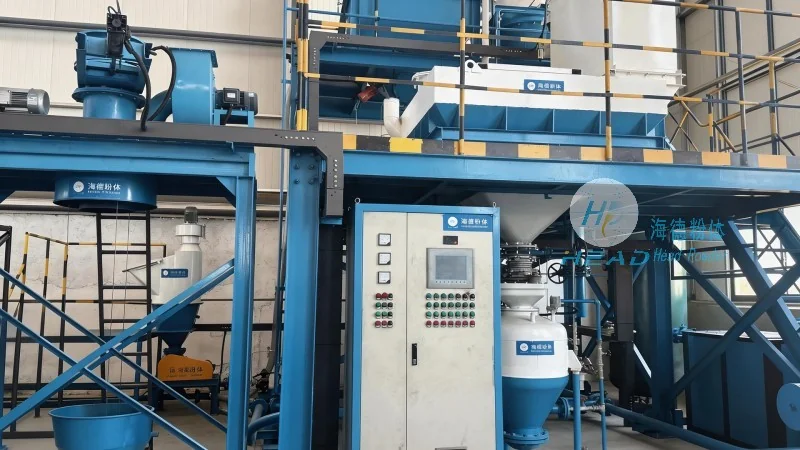
Vibratory conveying systems employ vibrations to move metal particles along a conveyor bed. The system consists of a trough or belt that is mounted on a vibrating mechanism, which causes the particles to move forward due to the oscillatory motion. This method is particularly effective for handling materials that are sticky, clumpy, or have a tendency to settle, as the vibrations help to break up agglomerates and maintain a consistent flow. Vibratory conveyors are often used in applications where the material needs to be elevated or moved at an angle, and they can be equipped with adjustable vibration frequencies and amplitudes to optimize performance. One of the key benefits of vibratory systems is their low maintenance requirements, as they have fewer moving parts compared to other mechanical conveyors. However, they may not be suitable for very fine or powdery materials, as the vibrations can cause excessive dust generation or particle segregation. In industrial settings, vibratory conveyors are commonly used in food processing, chemical manufacturing, and pharmaceutical industries for the transport of granular or bulk materials.
6. Air-Lift Conveying Systems
Air-lift conveying systems are a specialized type of pneumatic conveyor that uses a vertical pipeline to transport metal particles using air pressure. The system consists of a vertical tube with an inlet at the bottom and an outlet at the top, where air is introduced at the bottom to create a pressure differential. As air rises through the tube, it entrains the metal particles and lifts them upward. This method is particularly effective for handling fine powders and granules, as it allows for vertical transport without the need for external lifting equipment. Air-lift conveyors are often used in applications where space is limited or where vertical movement is required, such as in chemical reactors or storage silos. The design of air-lift systems involves careful selection of the air flow rate and pressure to ensure efficient particle lift and prevent system blockages. One of the key advantages of air-lift conveyors is their ability to handle high volumes of material with minimal maintenance, making them a cost-effective solution for vertical material transport. However, they may not be suitable for very heavy or abrasive particles, as the vertical lift can cause increased wear on the pipeline and components.