

Comparison of Common Battery Material Conveying Methods
HeadPowder, a leading provider of engineering solutions, specializes in the design and manufacturing of efficient material handling systems tailored for the battery industry. In this article, we will explore the common conveying methods used for lithium battery materials, focusing on their applications, advantages, and suitability for different production environments. Understanding these methods is crucial for optimizing material flow, enhancing productivity, and ensuring safety in battery manufacturing processes.
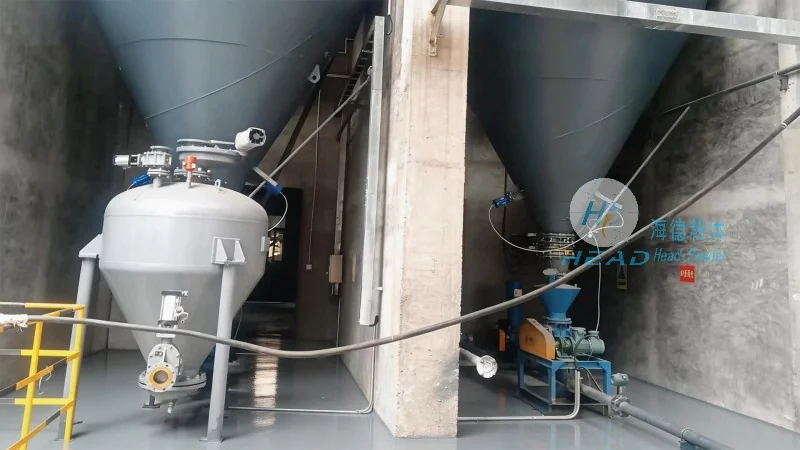
Overview of Conveying Methods for Lithium Battery Materials
Conveying systems are integral to the battery production line, as they facilitate the movement of raw materials, intermediates, and finished products. The choice of conveying method depends on factors such as material properties (e.g., particle size, moisture content, abrasiveness), production scale, and environmental considerations. HeadPowder's expertise lies in selecting and customizing the most appropriate conveying equipment to meet the specific needs of clients in the battery sector.
Screw Conveyors: A Versatile Solution for Bulk Material Handling
Screw conveyors, also known as auger conveyors, are widely used in the battery material handling process due to their versatility and simplicity. These systems consist of a rotating helical screw inside a U-shaped or tubular housing, which moves material forward through the rotation. HeadPowder's screw conveyors are designed to handle a variety of materials, including powders, granules, and small particles, commonly used in battery production such as lithium carbonate, lithium hydroxide, and various cathode and anode materials. The key advantages of screw conveyors include their ability to operate in a closed system, minimizing dust exposure and environmental contamination. Additionally, they are relatively low-cost, easy to install, and can be integrated into existing production lines without significant modifications. However, screw conveyors may not be suitable for highly abrasive or sticky materials, as this can lead to wear and reduced efficiency over time.
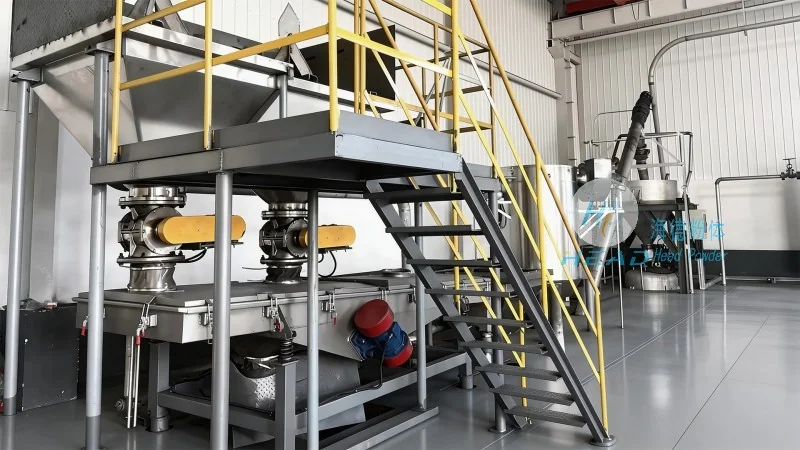
Vibrating Conveyors: Efficient for Bulk and Granular Materials
Vibrating conveyors utilize vibrations to move materials along a trough or conveyor belt. These systems are particularly effective for handling bulk materials with higher moisture content or those that are prone to bridging or caking. HeadPowder's vibrating conveyors are engineered to provide consistent and controlled material flow, ensuring that even challenging materials, such as wet or sticky powders, can be transported smoothly. The main benefits of vibrating conveyors include their ability to handle a wide range of particle sizes and shapes, low maintenance requirements, and the option for inclined or horizontal operation. This makes them ideal for applications where materials need to be elevated or moved over longer distances within the battery manufacturing facility. Furthermore, vibrating conveyors can be equipped with dust collection systems to enhance safety and compliance with environmental regulations.
Air-Powered Conveying: Ideal for Fine Powders and Dust Control
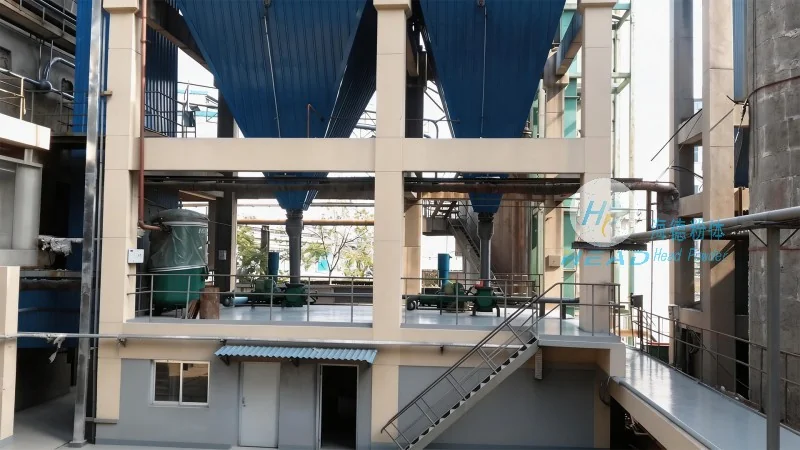
Air-powered or pneumatic conveying systems use compressed air to transport materials through a network of pipes. This method is particularly suitable for fine powders and dust, which are common in battery material processing, such as lithium salts and other chemical additives. HeadPowder's air-powered conveying solutions are designed to provide efficient and dust-free material transport, minimizing the risk of material loss and contamination. The primary advantages of pneumatic conveying include its ability to handle very fine particles, the option for enclosed systems to prevent dust emissions, and the flexibility to transport materials over long distances with minimal maintenance. However, pneumatic conveying systems require higher energy input compared to mechanical conveyors and may not be suitable for large volumes of bulk materials due to pressure limitations.
Selection Criteria for Choosing the Right Conveying Method
When selecting a conveying method for lithium battery materials, several factors must be considered to ensure optimal performance and cost-effectiveness. HeadPowder recommends evaluating the following criteria: material characteristics (e.g., particle size, moisture, abrasiveness), production volume and throughput requirements, system integration with existing equipment, and environmental regulations regarding dust control. For example, if the battery material is a fine powder with high moisture content, a vibrating conveyor or air-powered system may be more appropriate than a screw conveyor. Conversely, for bulk granules with low moisture content, a screw conveyor might be the most economical choice. Additionally, the layout of the production facility and the need for vertical or horizontal material movement will influence the selection of the most suitable conveying method.
Conclusion: Optimizing Material Handling with HeadPowder Solutions
Efficient material conveying is a critical component of the battery manufacturing process, directly impacting productivity, safety, and overall operational costs. HeadPowder, with its expertise in engineering tailored material handling systems, offers a range of conveying solutions that address the unique challenges of lithium battery production. By understanding the different conveying methods and their applications, manufacturers can select the most appropriate equipment to enhance their production line's performance. Whether it's screw conveyors for versatility, vibrating conveyors for efficiency with challenging materials, or air-powered systems for fine powders, HeadPowder provides customized solutions that meet the specific needs of clients in the battery industry. Contact HeadPowder today to learn more about how their conveying systems can optimize your battery material handling processes.