

Comparison of Common Salt Conveying Methods: Advantages and Disadvantages
When it comes to the transportation of salt in industrial and commercial applications, selecting the right conveying method is crucial for efficiency, cost-effectiveness, and operational safety. This article provides a detailed comparison of common salt conveying methods, examining their advantages and disadvantages to help you make an informed decision for your specific needs. The information is presented by Shandong HeadPowder Engineering Co., Ltd., a leading provider of powder handling solutions based in China.
HeadPowder specializes in designing and manufacturing equipment for the handling of bulk materials, including salt. With years of experience in the industry, the company offers tailored solutions that meet the unique requirements of various sectors such as food processing, chemical manufacturing, and infrastructure projects. The following comparison focuses on the most widely used salt conveying methods, providing insights into their operational characteristics and suitability for different applications.
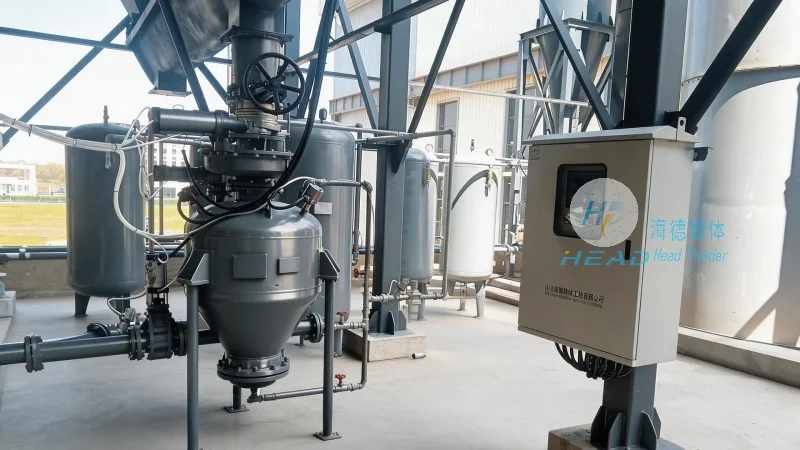
Gravity Conveying Systems
Gravity conveying, also known as pneumatic or pneumatic conveying, relies on the natural flow of salt under the influence of air pressure. This method is particularly effective for short to medium distances and low to moderate material flow rates. One of the primary advantages of gravity conveying is its simplicity and low energy consumption. Since it does not require mechanical components like motors or pumps, the system operates with minimal maintenance and operational costs. Additionally, the absence of moving parts reduces the risk of mechanical failure and contamination, which is critical for food-grade salt applications. However, gravity conveying has significant limitations. It is highly dependent on the vertical drop or incline of the system, making it unsuitable for horizontal or long-distance transport. The capacity is also limited, as the flow rate is determined by the air velocity and the size of the conveying line. This method is best suited for applications where the salt needs to be moved from a higher to a lower elevation, such as in storage silos to processing units.
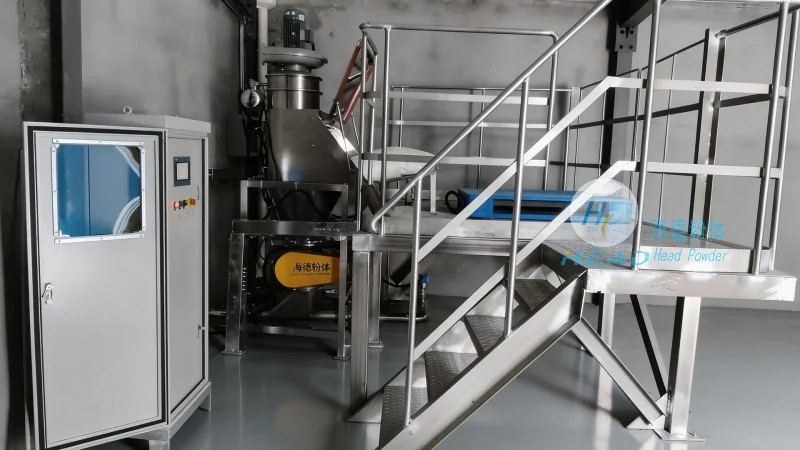
Mechanical Conveying Systems
Mechanical conveying systems utilize mechanical components to move salt, including screw conveyors, belt conveyors, and bucket elevators. These systems are widely used in industries due to their versatility and ability to handle a wide range of material types and flow rates. Screw conveyors, for example, are ideal for transporting granular or powdered salt through a rotating screw within a tube. They are compact, easy to install, and can operate in both horizontal and vertical orientations. The main advantage of screw conveyors is their ability to handle a variety of materials without the need for additional equipment. They are also relatively low-cost and require minimal maintenance. However, screw conveyors have some drawbacks. They are not suitable for abrasive materials, as the screw and tube can wear out quickly, leading to increased maintenance costs. Additionally, they can cause segregation of the salt particles, which may affect the quality of the final product. Belt conveyors, on the other hand, are excellent for long-distance horizontal transport. They consist of a continuous belt that moves over rollers, transporting the salt from one location to another. The primary advantage of belt conveyors is their high capacity and ability to cover long distances with minimal energy consumption. They are also suitable for transporting large quantities of salt, making them ideal for bulk handling applications. However, belt conveyors require regular maintenance, as the belt and rollers can wear out over time. They also need a flat surface and proper alignment to ensure smooth operation. Bucket elevators are another type of mechanical conveyor that uses buckets attached to a chain or belt to lift salt vertically. They are commonly used in industries where vertical transport is necessary, such as in feed mills or chemical plants. The main advantage of bucket elevators is their high capacity and ability to handle abrasive materials. They can transport large volumes of salt at high speeds, making them efficient for vertical lifting. However, bucket elevators have a higher initial cost compared to other mechanical systems and require more maintenance due to the moving parts. They also have a limited vertical lift height, which may not be suitable for very tall structures.
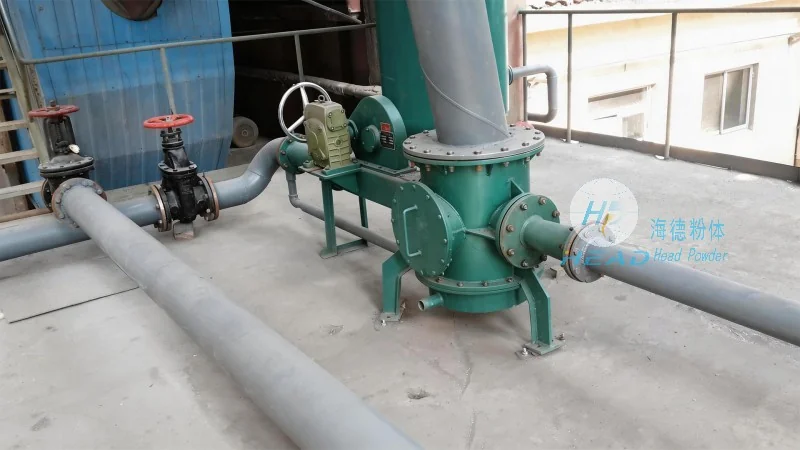
Pneumatic Conveying Systems
Pneumatic conveying systems use air or other gases to transport salt through a pipeline. This method is particularly effective for long-distance and high-volume transport, as well as for handling fine or dusty materials. There are two main types of pneumatic conveying: pressure and vacuum. Pressure conveying uses compressed air to push the salt through the pipeline, while vacuum conveying uses a vacuum to pull the salt from the source. The primary advantage of pneumatic conveying is its ability to transport salt over long distances without the need for intermediate storage or transfer points. It is also suitable for handling materials that are difficult to convey mechanically, such as fine powders or granules. Additionally, the system can be designed to be completely enclosed, which helps to prevent dust and contamination. However, pneumatic conveying has some significant drawbacks. It requires a high volume of air, which increases energy consumption and operational costs. The system also needs to be properly sealed to prevent air leakage, which can reduce efficiency. Furthermore, the material can be prone to segregation and degradation if the conveying velocity is too high or the pipeline is too long. This method is best suited for applications where the salt needs to be transported over long distances or where the material is fine and dusty, such as in the chemical industry or for bulk storage.