

Comparative Analysis of Common Reduction Iron Powder Conveying Methods: Advantages and Disadvantages
When it comes to handling reduction iron powder, selecting the right conveying method is crucial for ensuring efficiency, safety, and cost-effectiveness in industrial operations. Reduction iron powder, a key material in various manufacturing processes, requires specialized handling due to its fine particle size and potential reactivity. This article provides a detailed comparison of common reduction iron powder conveying methods, highlighting their advantages and disadvantages to help industrial professionals make informed decisions.
Overview of Reduction Iron Powder and Conveying Challenges
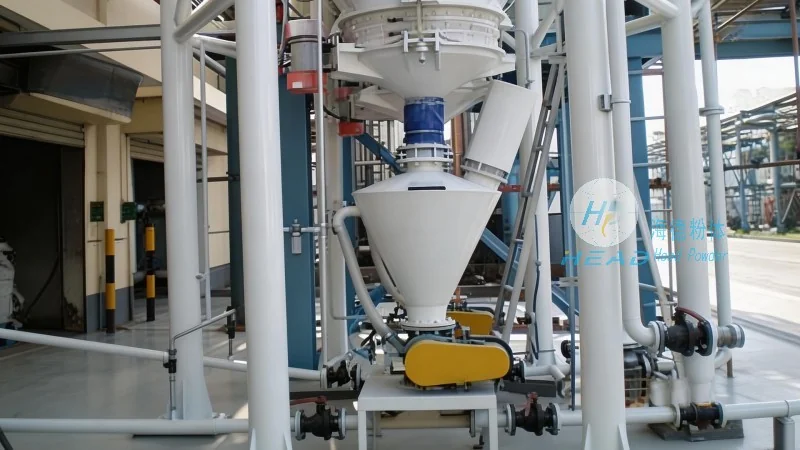
Reduction iron powder is a fine, metallic powder produced through the reduction of iron ore, often used in applications such as powder metallurgy, magnetic materials, and as a feedstock in steel production. Its fine particle size (typically ranging from 1 to 200 microns) and light weight make it prone to dust generation and airflow issues during handling. Conveying this material efficiently while minimizing loss, contamination, and operational hazards is a significant challenge for many industries. The choice of conveying method depends on factors like material properties, production scale, environmental regulations, and the specific requirements of the downstream process.
Spiral Conveyors: A Traditional Approach
Spiral conveyors, also known as screw conveyors, are one of the most common methods for transporting reduction iron powder. These systems consist of a rotating screw (screw flights) enclosed in a tube, which moves material from the inlet to the outlet through rotational force. The primary advantage of spiral conveyors is their simplicity and reliability. They are low-cost, require minimal maintenance, and can handle a wide range of materials, including fine powders. Additionally, they are enclosed, which helps contain dust and prevent material spillage, making them suitable for indoor applications. However, spiral conveyors have several limitations. They are not ideal for long-distance transport, as the friction and power consumption increase significantly with distance. This method is also less effective for handling highly abrasive or sticky powders, as the screw flights can wear out quickly. Furthermore, the risk of material bridging or clogging is higher in spiral conveyors, especially with fine powders that have a tendency to agglomerate.
Air-Flow Conveying (Pneumatic Conveying): High Efficiency and Versatility
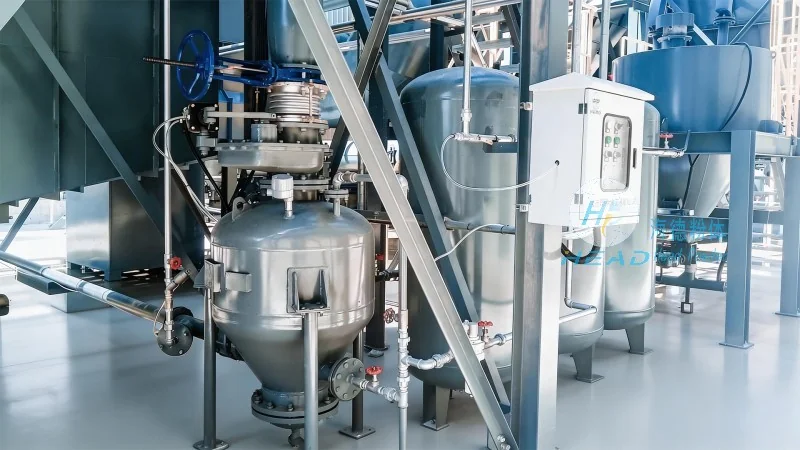
Air-flow or pneumatic conveying systems use compressed air to transport reduction iron powder through a pipeline. This method is highly efficient for long-distance and high-volume transport, making it suitable for large-scale industrial applications. The primary advantage of pneumatic conveying is its ability to handle fine powders over extended distances with minimal loss. It is also flexible, as the system can be easily modified to accommodate changes in production volume or material type. Additionally, pneumatic conveyors can be designed to operate in both positive and negative pressure modes, providing versatility in material handling. However, air-flow conveying has notable drawbacks. The system requires significant energy input due to the need for compressed air, which increases operational costs. Moreover, the high air velocity can cause wear on the pipeline and components, leading to higher maintenance expenses over time. Another challenge is the potential for material degradation or segregation if the conveying velocity is not optimized. Fine powders may also experience particle separation during transport, affecting the uniformity of the final product.
Vibrating Conveyors: Gentle and Low-Pressure Transport
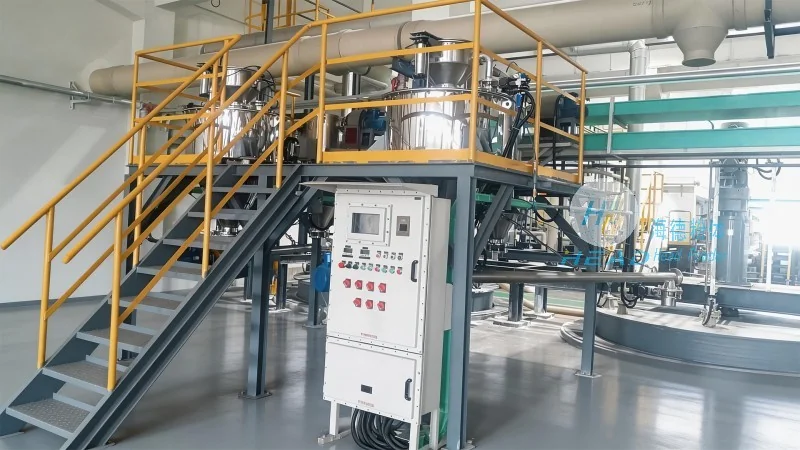
Vibrating conveyors use vibration to move reduction iron powder along a trough or conveyor belt. These systems are designed to handle fine powders gently, minimizing particle breakage and degradation. The primary advantage of vibrating conveyors is their ability to transport materials with minimal pressure, making them suitable for delicate or heat-sensitive powders. They are also relatively low-cost and easy to install, with simple maintenance requirements. Vibrating conveyors are effective for moderate distances and can handle a variety of materials, including those with high moisture content or sticky properties. However, they are not ideal for long-distance transport, as the conveying speed is generally slower compared to other methods. The system also requires a stable foundation to prevent vibration-related issues, and the trough design may limit the material's flow rate. Additionally, the risk of material bridging or clogging is higher in vibrating conveyors, especially with cohesive powders that tend to stick to the conveyor surface.
Comparison Summary: Choosing the Right Conveying Method
When selecting a conveying method for reduction iron powder, it is essential to consider the specific requirements of the application. Spiral conveyors are best suited for short-distance, low-cost applications where simplicity and reliability are prioritized. Air-flow conveying is ideal for large-scale, long-distance transport where efficiency and flexibility are key. Vibrating conveyors are preferred for handling delicate or heat-sensitive materials that require gentle transport. The choice also depends on factors such as material properties (e.g., particle size, moisture content, abrasiveness), production scale, and environmental regulations. By carefully evaluating these factors, industrial professionals can select the most appropriate conveying method to optimize performance, reduce costs, and ensure safe operation.
Conclusion
Effective handling of reduction iron powder is critical for maintaining product quality and operational efficiency in industrial processes. The choice of conveying method plays a significant role in achieving these goals. By understanding the advantages and disadvantages of each method, companies can make informed decisions that align with their specific needs. Whether opting for traditional spiral conveyors, efficient air-flow systems, or gentle vibrating conveyors, the key is to select a method that balances performance, cost, and safety. As industrial demands evolve, ongoing evaluation and optimization of conveying systems will remain essential to meet the challenges of modern material handling.