

Comparison of Common Lightweight Aggregate Conveying Methods
Lightweight aggregates are widely used in construction and industrial applications due to their low density and excellent thermal insulation properties. Efficient and reliable conveying of these materials is crucial for maintaining production efficiency and ensuring product quality. This article provides a detailed comparison of common lightweight aggregate conveying methods, highlighting their advantages, disadvantages, and suitable applications. The information is presented by Shandong HeadPowder Engineering Co., Ltd., a leading provider of specialized material handling solutions based in Shandong, China.
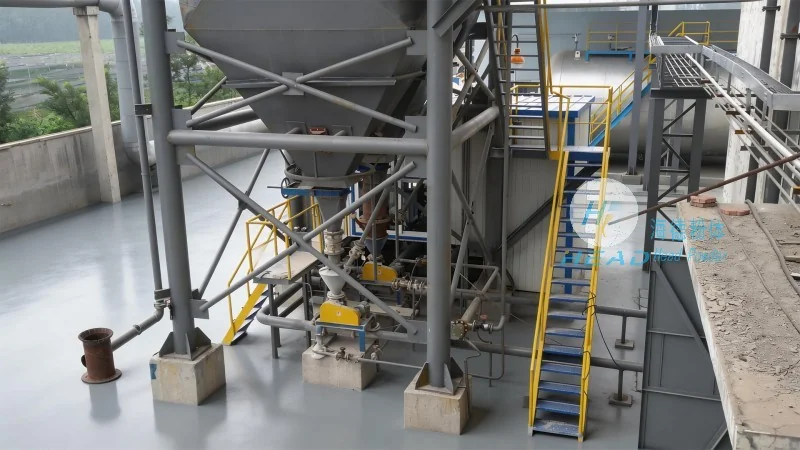
Introduction to Lightweight Aggregate Conveying
Lightweight aggregates, such as expanded clay, expanded shale, and perlite, are characterized by their reduced density compared to traditional aggregates. These materials are often used in lightweight concrete, insulation products, and other construction materials. Conveying these materials requires specialized equipment to handle their unique physical properties, including low bulk density, irregular shapes, and potential dust generation. The choice of conveying method depends on factors like material characteristics, production scale, and operational environment. Shandong HeadPowder Engineering Co., Ltd. specializes in designing and manufacturing customized material handling systems tailored to the specific needs of lightweight aggregate producers.
1. Air-Flow Conveying (Pneumatic Conveying)
Air-flow conveying, or pneumatic conveying, is a popular method for transporting lightweight aggregates over short to medium distances. This system uses compressed air to move material through a pipeline. There are two main types: pressure and vacuum systems. Pressure systems push material forward using positive pressure, while vacuum systems pull material using negative pressure. The primary advantage of pneumatic conveying is its ability to handle fine and dusty materials without the need for additional equipment like feeders or hoppers. However, it may not be suitable for very large or heavy aggregates due to the high energy consumption and potential for material degradation. Shandong HeadPowder Engineering Co., Ltd. offers advanced pneumatic conveying solutions that optimize air flow and reduce energy costs, ensuring efficient transport of lightweight aggregates.
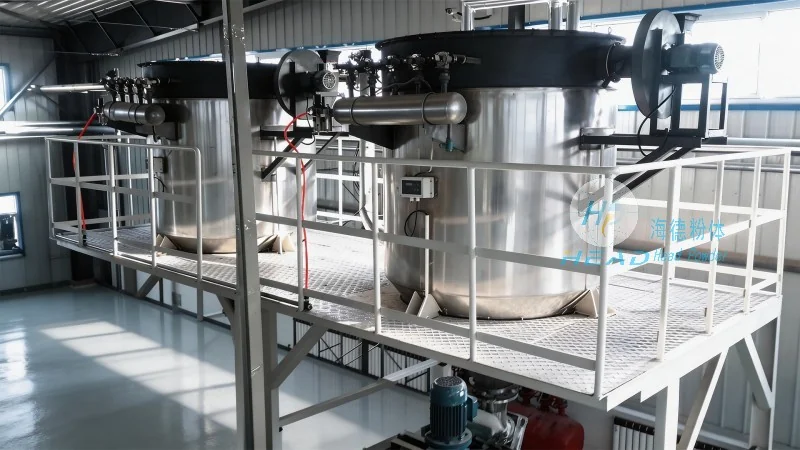
2. Screw Conveyors
Screw conveyors, also known as auger conveyors, are widely used for horizontal or slightly inclined transport of lightweight aggregates. The system consists of a rotating screw inside a trough, which moves material forward. Screw conveyors are simple in design, low-cost, and can handle a wide range of materials, including those with irregular shapes. They are particularly effective for transporting materials that are free-flowing and non-abrasive. The main drawback is that they may not be suitable for very fine or dusty materials, as the screw can cause excessive friction and material degradation. Additionally, screw conveyors require regular maintenance to prevent wear and tear. Shandong HeadPowder Engineering Co., Ltd. provides high-quality screw conveyor systems with durable materials and efficient design, ensuring reliable operation for lightweight aggregate handling.
3. Vibrating Conveyors
Vibrating conveyors use vibration to move lightweight aggregates along a trough. The conveyor is equipped with an electric motor and a vibration mechanism that causes the trough to oscillate. This motion helps to move material forward, even at low speeds. Vibrating conveyors are ideal for handling materials with high moisture content or those that are sticky. They are also effective for transporting materials that are difficult to convey with other methods, such as those with high bulk density or irregular shapes. The main disadvantage is that they can generate noise and may require more maintenance than other systems. Shandong HeadPowder Engineering Co., Ltd. offers customized vibrating conveyor solutions that minimize noise and maximize efficiency, making them suitable for various industrial applications.
4. Belt Conveyors
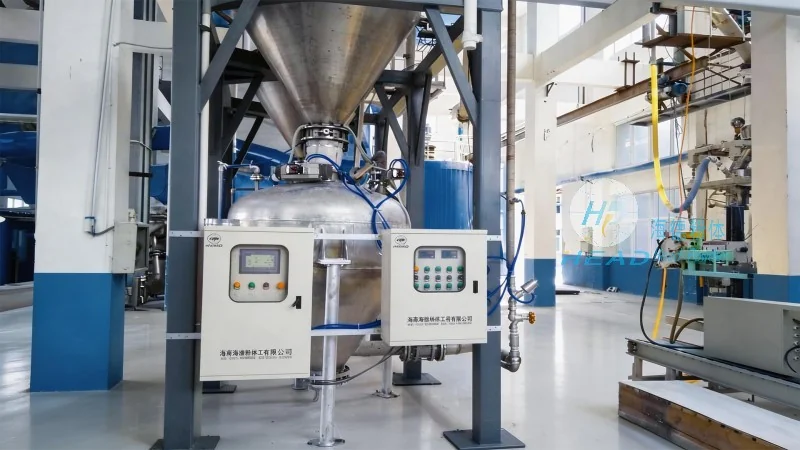
Belt conveyors are commonly used for transporting lightweight aggregates over long distances or at high speeds. The system consists of a continuous belt that moves material from one point to another. Belt conveyors are highly efficient and can handle large volumes of material. They are suitable for both horizontal and inclined transport and can be equipped with various accessories like feeders and dividers. The main advantage is their ability to transport materials over long distances with minimal maintenance. However, belt conveyors require a significant amount of space and may not be suitable for very fine or dusty materials, as the belt can accumulate debris. Shandong HeadPowder Engineering Co., Ltd. manufactures robust belt conveyor systems designed to handle the unique challenges of lightweight aggregate transport, ensuring consistent performance and durability.
5. Hydraulic Conveying
Hydraulic conveying uses water or a slurry to transport lightweight aggregates. The material is mixed with water to form a slurry, which is then pumped through a pipeline. This method is particularly effective for transporting fine or dusty materials that are difficult to handle with other methods. The main advantage is that it can handle very high volumes of material and is relatively low-cost. However, hydraulic conveying requires additional equipment for slurry preparation and separation, and it may not be suitable for materials that are sensitive to moisture. Shandong HeadPowder Engineering Co., Ltd. provides hydraulic conveying solutions that optimize slurry flow and minimize water usage, ensuring efficient and environmentally friendly transport of lightweight aggregates.
Choosing the Right Conveying Method for Lightweight Aggregates
When selecting a conveying method for lightweight aggregates, several factors must be considered. The first is the material's physical properties, such as density, shape, and moisture content. The second is the distance and direction of transport. The third is the production scale and operational environment. Shandong HeadPowder Engineering Co., Ltd. offers comprehensive consultation services to help clients choose the most suitable conveying method based on their specific needs. Our team of experts evaluates the material characteristics, production requirements, and operational constraints to recommend the optimal solution. By working with Shandong HeadPowder Engineering Co., Ltd., clients can ensure efficient, reliable, and cost-effective transport of lightweight aggregates, enhancing overall production efficiency and product quality.