Công ty TNHH Kỹ thuật Headpowder Sơn Đông chuyên vận chuyển khí nén bột và hạt. Nhờ thế mạnh hợp tác doanh nghiệp‑trường‑viện, chúng tôi cung cấp giải pháp vận chuyển kín, không bụi, độ chính xác cao.
Heavy calcium carbonate (GCC) is a widely used industrial material in various sectors such as plastics, paper, and coatings. The efficient and reliable transportation of GCC from storage to processing units is crucial for maintaining production efficiency and product quality. This article explores the common methods of heavy calcium carbonate conveying, with a specific focus on the advantages and applications of pneumatic conveying systems.
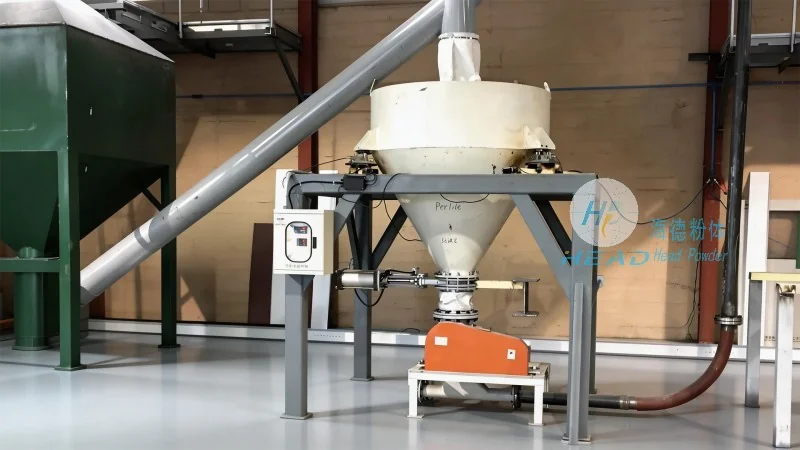
HeadPowder, a leading manufacturer in the field, specializes in providing tailored conveying solutions for heavy calcium carbonate. With years of experience and a deep understanding of material handling technologies, HeadPowder offers comprehensive systems that meet the diverse needs of industrial clients. The company's headquarters is located in Shandong, China, where its engineering team develops and manufactures high-quality conveying equipment.
Gravity Conveying Systems: A Traditional Approach
Gravity conveying systems are one of the most common methods used for transporting heavy calcium carbonate. These systems rely on the natural force of gravity to move materials from one point to another. Typically, the material is fed into a conveyor system, such as a belt or screw conveyor, and then transported to the processing area. Gravity conveyors are often used in applications where the distance between the storage and processing units is relatively short, and the material flow is steady. They are particularly suitable for handling bulk quantities of GCC with minimal dust generation. However, the efficiency of gravity conveyors can be limited by the slope required to maintain a consistent flow rate, and they may not be suitable for long-distance or high-volume applications.
Pneumatic Conveying Systems: The Preferred Solution for Heavy Calcium Carbonate
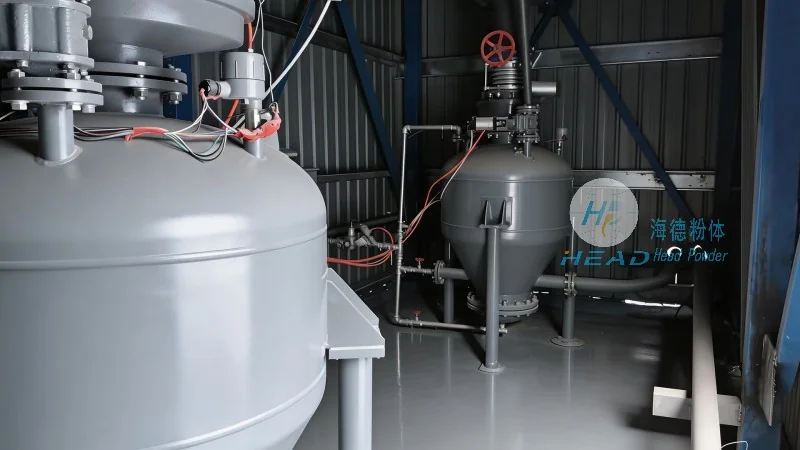
Pneumatic conveying systems have become the preferred method for transporting heavy calcium carbonate in many industrial settings. These systems use air or other gases to move materials through a pipeline. There are two main types of pneumatic conveying: dilute-phase and dense-phase. Dilute-phase systems are suitable for short to medium distances and low to medium material loads, while dense-phase systems are ideal for longer distances and higher material loads. Pneumatic conveying offers several advantages over traditional methods, including the ability to transport materials vertically and horizontally, reduced labor costs, and improved safety due to enclosed systems that minimize dust exposure.
HeadPowder's pneumatic conveying systems are designed to handle heavy calcium carbonate efficiently and reliably. The company's engineers consider factors such as material characteristics, required distance, and production capacity when designing a system. For example, a dilute-phase system may be recommended for a plant with a short conveying distance and moderate material flow, while a dense-phase system is more appropriate for a facility requiring long-distance transport of high volumes of GCC. The systems are equipped with high-quality components, including air compressors, filters, and material separators, to ensure consistent performance and minimal maintenance.
Key Components of Heavy Calcium Carbonate Pneumatic Conveying Systems
Effective pneumatic conveying of heavy calcium carbonate depends on several key components. The first is the air compressor, which provides the necessary pressure to move the material through the pipeline. The compressor must be capable of delivering the required airflow and pressure to maintain the desired conveying velocity. The second component is the filter system, which removes dust and other particles from the air to prevent clogging and ensure the longevity of the equipment. The filter system is typically equipped with a dust collector that can be easily cleaned or replaced. The third component is the material separator, which separates the GCC from the air at the end of the conveying line. This separator may be a cyclone or a bag filter, depending on the system design. The separator is crucial for maintaining a clean and safe working environment by preventing dust from being released into the atmosphere.
Advantages of Using Heavy Calcium Carbonate Pneumatic Conveying Systems
There are several advantages to using pneumatic conveying systems for heavy calcium carbonate. First, these systems offer high efficiency and reliability, as they can transport materials over long distances without the need for multiple transfer points. This reduces the risk of material loss and contamination. Second, pneumatic conveying systems are flexible and can be easily integrated into existing production lines. They can be adjusted to accommodate changes in production volume or material characteristics. Third, these systems are energy-efficient compared to other methods, as they use less power to transport materials over long distances. Finally, pneumatic conveying systems provide a clean and safe working environment by enclosing the material in a pipeline, which minimizes dust exposure and reduces the risk of accidents.
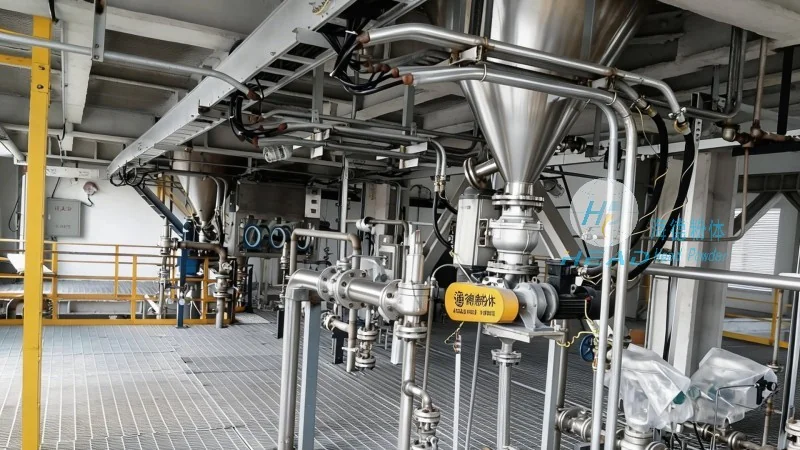
Applications of Heavy Calcium Carbonate Pneumatic Conveying Systems
Heavy calcium carbonate pneumatic conveying systems are used in a wide range of applications across various industries. In the plastics industry, these systems are used to transport GCC from storage silos to extrusion lines. In the paper industry, they are used to convey GCC to the coating and finishing processes. In the coatings industry, they are used to transport GCC to the mixing and application stages. The systems are also used in the production of calcium carbonate-based products, such as calcium carbonate powders and granules. HeadPowder's pneumatic conveying systems have been successfully implemented in many of these applications, providing reliable and efficient material transport solutions.
Conclusion
Heavy calcium carbonate conveying is a critical process in many industrial applications, and the choice of conveying method can significantly impact production efficiency and product quality. While gravity conveying systems are a traditional option, pneumatic conveying systems have become the preferred solution due to their efficiency, flexibility, and safety features. HeadPowder, with its expertise in material handling technologies, offers high-quality pneumatic conveying systems that are tailored to the specific needs of each client. By understanding the advantages and applications of different conveying methods, industrial clients can make informed decisions to optimize their material transport processes and improve overall productivity.

 Shandong Headpowder Engineering Co., Ltd.
 156-6277-7102(Quản lý Trương)
  0531-83386006
  Thành phố Tế Nam, Tỉnh Sơn Đông, Trung Quốc
Điện thoại
WeChatTư vấn
Lên đầu