Công ty TNHH Kỹ thuật Headpowder Sơn Đông chuyên vận chuyển khí nén bột và hạt. Nhờ thế mạnh hợp tác doanh nghiệp‑trường‑viện, chúng tôi cung cấp giải pháp vận chuyển kín, không bụi, độ chính xác cao.
For businesses in the dried chili processing industry, selecting and designing an efficient pneumatic conveying system is crucial for optimizing production efficiency and ensuring product quality. This article, presented by Shandong HeadPowder Engineering Co., Ltd. (hereinafter referred to as HeadPowder), provides a comprehensive guide on how to design a reasonable dried chili powder pneumatic conveying system plan, covering key considerations, system components, and practical design steps.
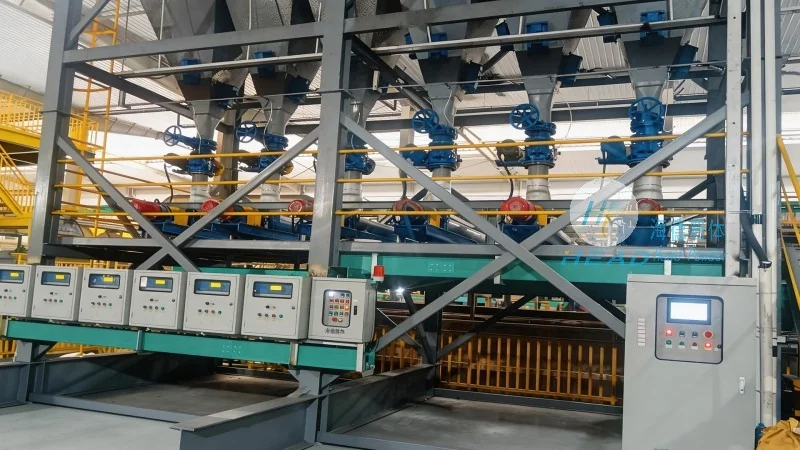
Understanding the Importance of Pneumatic Conveying for Dried Chili Powder
Dried chili powder is a fine, lightweight powder with unique handling characteristics. Traditional methods like bucket elevators or belt conveyors may cause product degradation, such as clumping or contamination. Pneumatic conveying systems offer a solution by transporting materials in a closed system using air pressure, which helps maintain product integrity and reduces labor costs. The choice of system type—positive pressure, negative pressure, or a combination—depends on factors like the distance to be covered, the volume of material, and the need for product containment.
Key Factors to Consider in System Design
When designing a pneumatic conveying system for dried chili powder, several critical factors must be evaluated to ensure optimal performance. First, the material's physical properties, including particle size, density, and moisture content, directly impact system selection. Dried chili powder typically has a particle size ranging from 100 to 500 microns, with a bulk density of around 0.6 to 0.8 g/cm³. These characteristics affect air velocity requirements and the risk of blockages. Second, the system's capacity needs to match the production line's output. For example, a small-scale operation might require a system with a capacity of 1-5 tons per hour, while a large-scale facility could need 10-50 tons per hour or more. Third, the distance between the feeding point and the discharge point is a key determinant. Short distances (under 50 meters) are often suitable for positive pressure systems, while longer distances (over 100 meters) may necessitate negative pressure or a hybrid approach to maintain pressure and prevent product degradation.
System Components and Their Roles
A typical pneumatic conveying system for dried chili powder consists of several interconnected components, each playing a vital role in the overall operation. The primary components include a feeder, which ensures a consistent and controlled flow of material into the system; a conveying line, which transports the material using air pressure; a separator, which separates the conveyed material from the air stream; and a dust collector, which captures any fine particles to prevent environmental contamination. The feeder is often a rotary valve or a star feeder, designed to handle fine powders without causing blockages. The conveying line is typically made of stainless steel or plastic, chosen for its corrosion resistance and ability to maintain product purity. The separator, such as a cyclone or a bag filter, efficiently separates the product from the air, while the dust collector ensures compliance with environmental regulations.
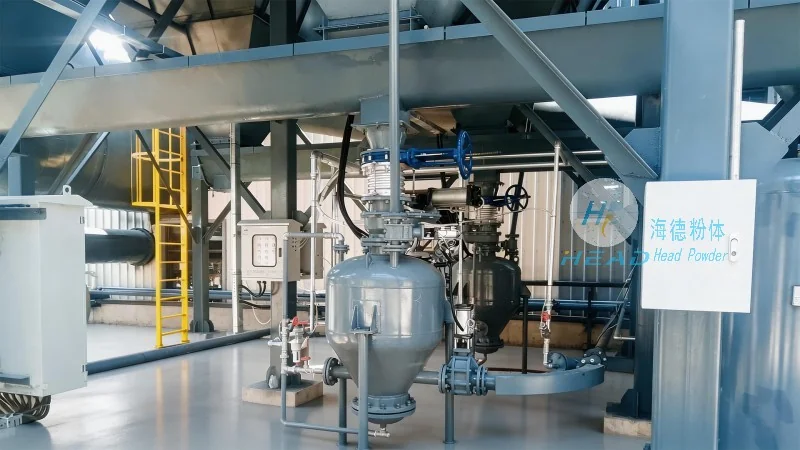
Step-by-Step Design Process
Designing a pneumatic conveying system involves a systematic approach to ensure all requirements are met. The first step is to conduct a thorough analysis of the production needs, including the material's characteristics, the required capacity, and the distance to be covered. This analysis helps determine the appropriate system type and component specifications. The second step is to calculate the necessary air velocity and pressure. For dried chili powder, a typical air velocity in the conveying line is around 20-30 m/s, which balances the need to prevent blockages with energy efficiency. The third step is to select the appropriate feeder and separator based on the material's properties and system capacity. For example, a positive pressure system might use a rotary valve feeder and a cyclone separator, while a negative pressure system could use a venturi feeder and a bag filter. The fourth step is to calculate the power requirements, including the fan or blower capacity and the motor size. This involves considering the system's pressure drop, which is influenced by the length of the conveying line, the number of bends, and the type of components used. Finally, the system is tested and optimized to ensure it meets the production requirements and operates efficiently.
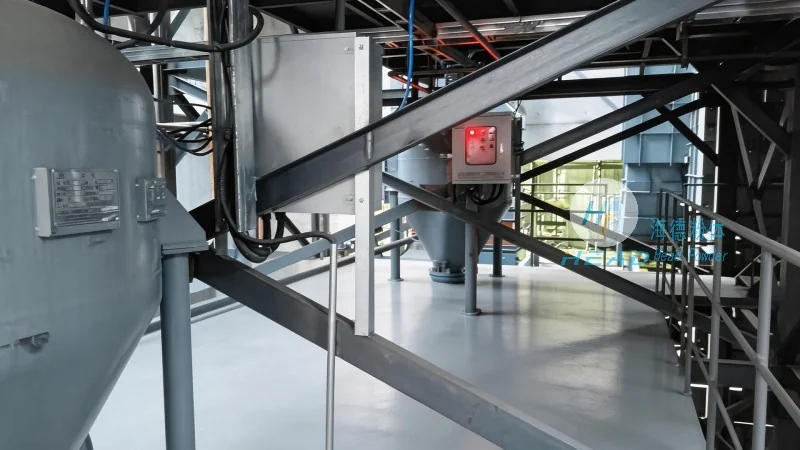
Case Study: Implementing a Positive Pressure System for a Dried Chili Processing Plant
HeadPowder recently designed and installed a positive pressure pneumatic conveying system for a dried chili processing plant in Shandong, China. The plant processes 20 tons of dried chili powder per day, with a conveying distance of 80 meters from the grinding unit to the packaging line. The system was designed using a rotary valve feeder, a stainless steel conveying line with 90-degree bends, and a cyclone separator. The air velocity was set at 25 m/s, and the fan was sized to provide a pressure of 1500 Pa. The system successfully transported the dried chili powder without any blockages or product degradation, achieving a capacity of 22 tons per day. The plant reported a 30% reduction in labor costs and a 20% increase in production efficiency compared to traditional methods.
Maintenance and Troubleshooting Tips
Proper maintenance is essential to ensure the long-term performance and reliability of a pneumatic conveying system. Regular cleaning of the conveying line and separator is necessary to prevent the buildup of product residue, which can affect system efficiency. The feeder should be checked for wear and tear, and the rotary valve components should be lubricated as needed. The fan or blower should be inspected for any signs of wear or damage, and the motor should be checked for proper operation. Common issues in pneumatic conveying systems include blockages, pressure drop, and product degradation. Blockages can be caused by too much material in the feeder or a clogged separator, and can be resolved by adjusting the feeder speed or cleaning the separator. Pressure drop can be caused by a long conveying line or a clogged filter, and can be addressed by increasing the air velocity or cleaning the filter. Product degradation can be caused by excessive air velocity or high temperature, and can be mitigated by reducing the air velocity or adding a cooling system.
Conclusion
Designing a reasonable pneumatic conveying system for dried chili powder requires careful consideration of material properties, system capacity, and operational requirements. By following a systematic design process and selecting appropriate components, businesses can achieve efficient material handling, maintain product quality, and reduce operational costs. Shandong HeadPowder Engineering Co., Ltd. specializes in designing and manufacturing customized pneumatic conveying systems tailored to the specific needs of dried chili processing facilities, ensuring optimal performance and reliability.

 Shandong Headpowder Engineering Co., Ltd.
 156-6277-7102(Quản lý Trương)
  0531-83386006
  Thành phố Tế Nam, Tỉnh Sơn Đông, Trung Quốc
Điện thoại
WeChatTư vấn
Lên đầu