

Common PVC Pellet Conveying Methods: Advantages and Features of HeadPowder's PVC Pellet Pneumatic Conveying System
When it comes to handling PVC pellets, selecting the right conveying method is crucial for efficiency, cost-effectiveness, and operational safety. The choice of conveying system directly impacts production throughput, material quality, and overall process reliability. In this article, we explore common PVC pellet conveying methods and highlight the advantages of HeadPowder's pneumatic conveying solutions for PVC pellets.
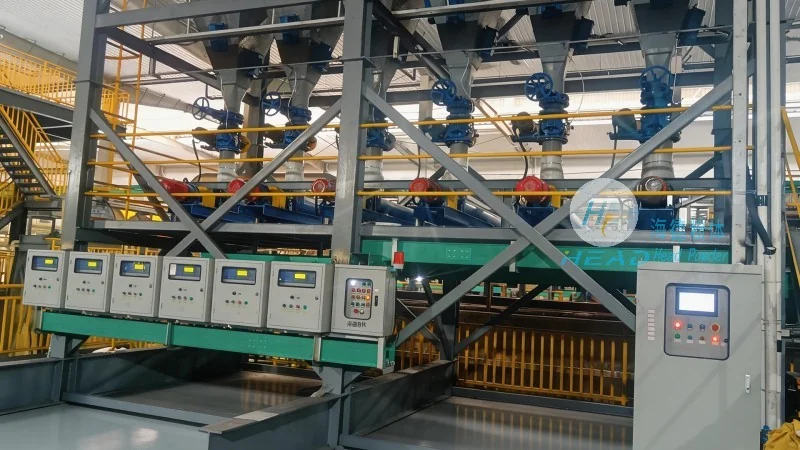
Understanding Common PVC Pellet Conveying Methods
PVC pellets are widely used in manufacturing various products, from pipes and fittings to flooring and construction materials. The demand for efficient and reliable conveying systems has led to the development of several methods, each with its own set of advantages and limitations. The primary methods include mechanical conveying, such as screw conveyors and belt conveyors, and pneumatic conveying, which uses air pressure to move materials.
Advantages of Mechanical Conveying for PVC Pellets
Mechanical conveying systems, like screw conveyors and belt conveyors, are widely used in industrial applications due to their simplicity and reliability. Screw conveyors, also known as auger conveyors, use a rotating screw to move materials along a tube or trough. They are suitable for handling PVC pellets with moderate to high bulk density and are relatively low-cost to install and maintain. Belt conveyors, on the other hand, use a continuous belt to transport materials over a series of rollers or idlers. These systems are ideal for long-distance conveying and can handle larger volumes of PVC pellets. However, mechanical systems have limitations when it comes to handling fine or dusty materials, as they can cause material degradation or blockages.
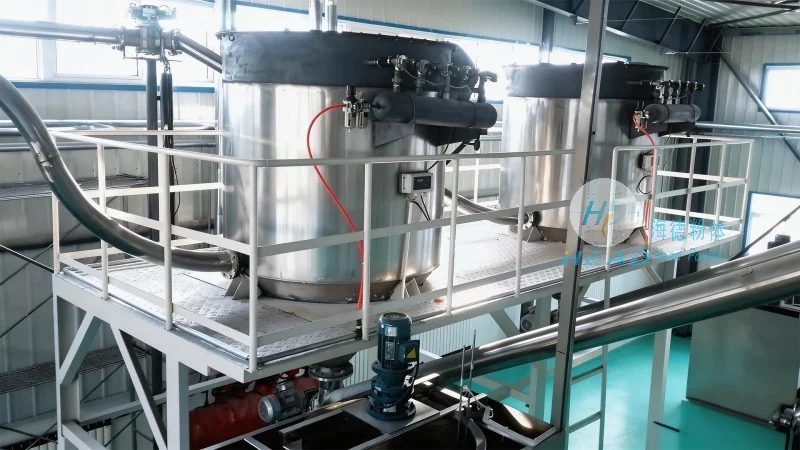
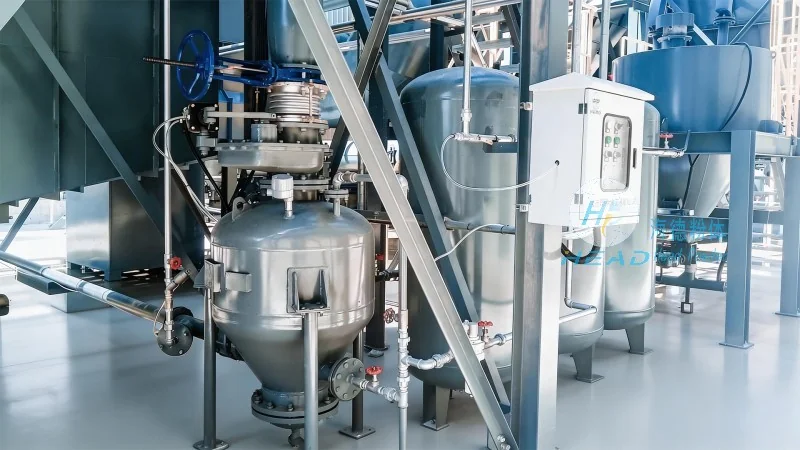
Pneumatic Conveying: A Superior Alternative for PVC Pellets
Pneumatic conveying, particularly the positive displacement type, offers several advantages over mechanical systems for PVC pellet handling. Unlike mechanical systems that rely on physical contact to move materials, pneumatic conveying uses air pressure to transport particles through a pipeline. This method is gentler on the material, reducing the risk of degradation or contamination. Pneumatic systems are also more flexible, allowing for changes in direction and distance without the need for complex reconfiguration. Additionally, they can handle a wide range of particle sizes and shapes, making them suitable for diverse PVC pellet applications.
HeadPowder's PVC Pellet Pneumatic Conveying System: Key Features
HeadPowder, a leading manufacturer of industrial conveying equipment, specializes in providing customized pneumatic conveying solutions for PVC pellets. Based in Shandong, China, HeadPowder leverages over [years of experience] to deliver high-quality, reliable systems tailored to the unique needs of PVC manufacturers. Their PVC pellet pneumatic conveying system is engineered to enhance efficiency, reduce maintenance costs, and ensure consistent material handling. The key features of HeadPowder's PVC pellet pneumatic conveying system include: