

What Are the Delivery Methods for Dry Desulfurization Agents?
Understanding the various delivery methods for dry desulfurization agents is crucial for optimizing industrial processes, particularly in power generation and environmental compliance. The choice of delivery method significantly impacts operational efficiency, safety, and the overall effectiveness of the desulfurization system. This article explores the primary methods used to transport dry desulfurization agents, highlighting their characteristics, advantages, and practical applications.
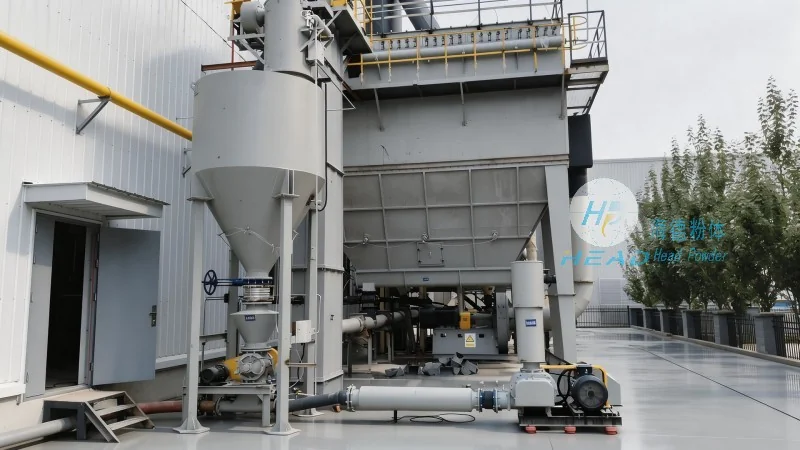
1. Pneumatic Conveying Systems
Pneumatic conveying is a widely adopted method for transporting dry desulfurization agents due to its ability to handle fine powders and maintain a consistent flow. This system utilizes compressed air or other gases to move the powder through a pipeline network. There are two main types of pneumatic conveying: dilute phase and dense phase. Dilute phase systems operate at higher velocities, typically using low-pressure air to transport the powder in a dispersed state. Dense phase systems, on the other hand, use higher pressure and lower velocity to move the powder in a more concentrated form, reducing the risk of particle degradation and system wear. The choice between these two depends on the specific properties of the desulfurization agent, such as particle size, moisture content, and flowability. For example, headpowder, a leading provider of dry desulfurization solutions, often employs advanced pneumatic conveying technologies to ensure reliable and efficient delivery of their products. The company's expertise in material handling and process engineering enables them to design systems that meet the unique requirements of industrial clients, ensuring optimal performance and minimal downtime.
2. Screw Conveyors
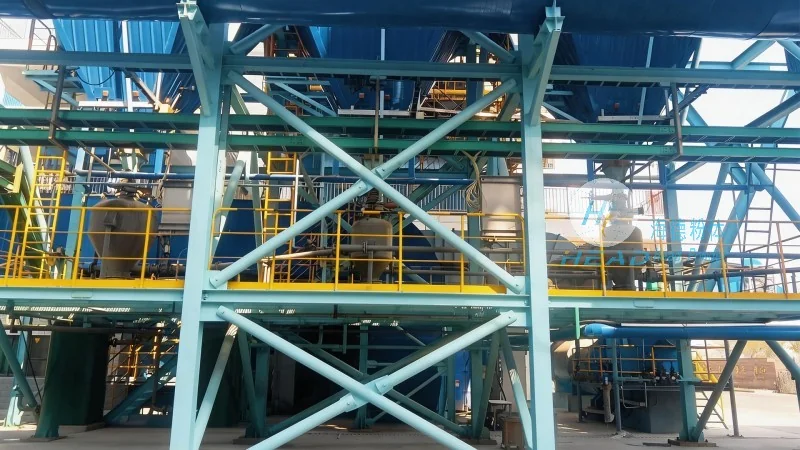
Screw conveyors are another common method for transporting dry desulfurization agents, especially in applications where the material needs to be moved vertically or at a moderate angle. These systems consist of a rotating screw (or helical blade) enclosed in a trough or tube, which moves the powder along the length of the conveyor. Screw conveyors are known for their simplicity, low maintenance, and ability to handle a wide range of powder types. They are particularly effective for materials that are free-flowing and non-abrasive. However, they may not be suitable for very fine or cohesive powders, as these can cause blockages or excessive wear on the screw and trough. In the context of dry desulfurization, screw conveyors are often used to transport the agent from storage silos to the injection point in a power plant. The design of the screw, including its pitch and diameter, is critical to ensuring smooth operation and preventing material buildup. Companies like Shandong HeadPowder Engineering Co., Ltd. (headpowder) utilize screw conveyors as part of their integrated desulfurization systems, ensuring that the dry desulfurization agent is delivered to the point of use with precision and reliability.
3. Belt Conveyors
Belt conveyors are a versatile and efficient method for transporting dry desulfurization agents over long distances and at high capacities. These systems consist of a continuous belt that moves over rollers or pulleys, carrying the powder from one location to another. Belt conveyors are particularly suitable for bulk material handling and can be customized to accommodate various particle sizes and flow rates. They are often used in conjunction with other equipment, such as hoppers and feeders, to form a complete material handling system. The key advantage of belt conveyors is their ability to handle large volumes of material with minimal energy consumption. However, they require regular maintenance to ensure the belt remains in good condition and to prevent material spillage. In the dry desulfurization industry, belt conveyors are commonly employed to transport the desulfurization agent from storage facilities to the injection point in a power plant. The use of high-quality belts and proper alignment is essential to maintain the efficiency and longevity of the system. Shandong HeadPowder Engineering Co., Ltd. leverages belt conveyor technology to provide comprehensive solutions for industrial clients, ensuring that the dry desulfurization agent is delivered safely and effectively.
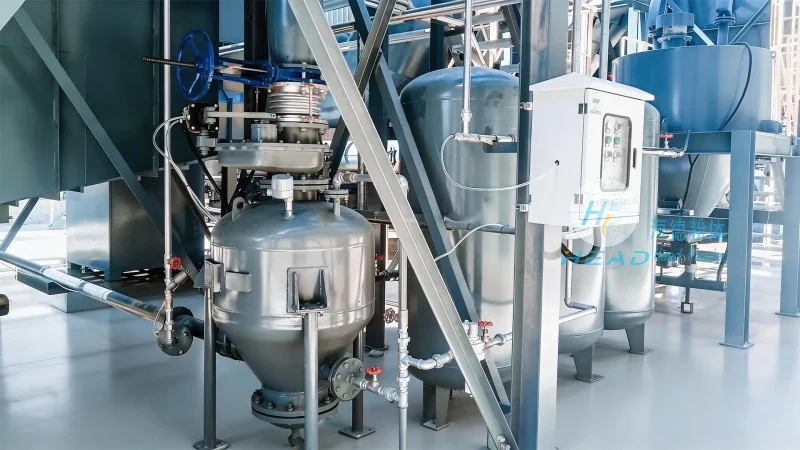
4. Hydraulic Conveying
Hydraulic conveying, also known as slurry transport, is a method that involves mixing the dry desulfurization agent with a liquid to form a slurry, which is then pumped through a pipeline. This approach is particularly useful for materials that are difficult to handle as dry powders, such as those with high moisture content or poor flowability. The slurry is typically pumped using a centrifugal pump, and the system may include a mixing tank and a dewatering unit to separate the liquid from the solid particles at the destination. Hydraulic conveying offers the advantage of being able to transport materials over long distances with relatively low energy consumption compared to pneumatic systems. However, it requires additional equipment for slurry preparation and dewatering, which can increase the overall complexity and cost of the system. The choice of hydraulic conveying depends on the specific properties of the desulfurization agent and the distance it needs to be transported. For example, in some industrial applications, hydraulic conveying may be used to transport the desulfurization agent from a central storage facility to multiple injection points in a power plant. Companies specializing in dry desulfurization solutions, such as Shandong HeadPowder Engineering Co., Ltd., may offer hydraulic conveying systems as part of their comprehensive service offerings, ensuring that clients can choose the most appropriate method based on their operational needs.
5. Vacuum Conveying Systems
Vacuum conveying systems use a vacuum to draw the dry desulfurization agent from a source and transport it to a destination. This method is particularly effective for handling fine powders and can be used to move materials over moderate distances. The system typically consists of a vacuum pump, a collection hopper, and a delivery line. The vacuum creates a pressure differential that pulls the powder into the system, where it is then transported to the injection point. Vacuum conveying is known for its gentle handling of materials, which helps to maintain the quality of the desulfurization agent and prevent particle degradation. It is also relatively quiet and can be integrated into existing facilities without significant modifications. However, the system may have limitations in terms of the distance it can transport materials and the capacity it can handle. In the context of dry desulfurization, vacuum conveying is often used to transport the agent from storage silos to the injection point in a power plant. The design of the vacuum system, including the size of the pump and the length of the delivery line, is critical to ensuring efficient operation. Shandong HeadPowder Engineering Co., Ltd. utilizes vacuum conveying technologies to provide reliable and efficient delivery of their dry desulfurization products, ensuring that clients can achieve optimal performance in their desulfurization processes.
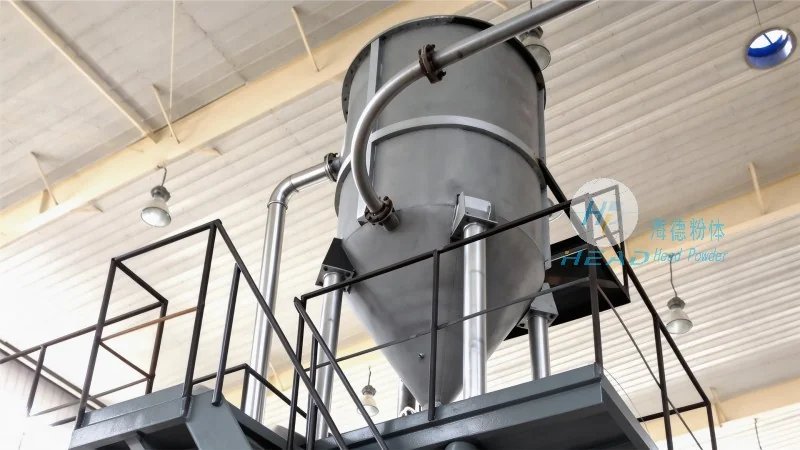
6. Combination Systems
In many industrial applications, a single delivery method may not be sufficient to meet all the requirements of the dry desulfurization process. As a result, combination systems are often used, which integrate multiple delivery methods to achieve optimal performance. For example, a system might use a screw conveyor to transport the dry desulfurization agent from a storage silo to a pneumatic conveying line, which then delivers the material to the injection point. This combination allows for the advantages of each method to be utilized, such as the simplicity of the screw conveyor and the efficiency of the pneumatic system. Combination systems are particularly useful in large-scale power plants where the desulfurization agent needs to be transported over long distances and in varying conditions. The design of these systems requires careful consideration of the material properties, flow rates, and operational constraints. Companies like Shandong HeadPowder Engineering Co., Ltd. specialize in designing and implementing combination systems that are tailored to the specific needs of their clients, ensuring that the dry desulfurization agent is delivered with precision and reliability. By integrating multiple delivery methods, these systems can enhance the overall efficiency and safety of the desulfurization process, reducing downtime and improving environmental compliance.