

Common Baking Powder Conveying Methods: A Comparison of Advantages and Disadvantages
Baking powder, a vital leavening agent in baking, requires efficient and reliable transportation from storage to processing areas in food production facilities. The choice of conveying method significantly impacts operational efficiency, product quality, and overall cost-effectiveness. This article provides a detailed comparison of common baking powder conveying methods, highlighting their advantages and disadvantages to help manufacturers make informed decisions.
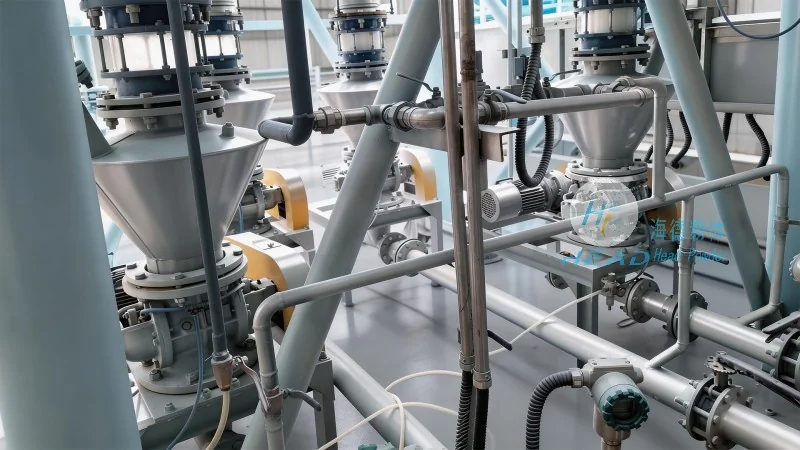
Key Factors Influencing Conveying Method Selection
Before evaluating specific conveying methods, it is essential to consider several key factors that influence the suitability of a system. These include the bulk density and flow characteristics of the baking powder, the distance and elevation changes between the storage and processing areas, the required throughput capacity, and the need for contamination control. Additionally, factors such as space availability, maintenance requirements, and initial investment costs play a critical role in the decision-making process.
1. Gravity Conveying Systems
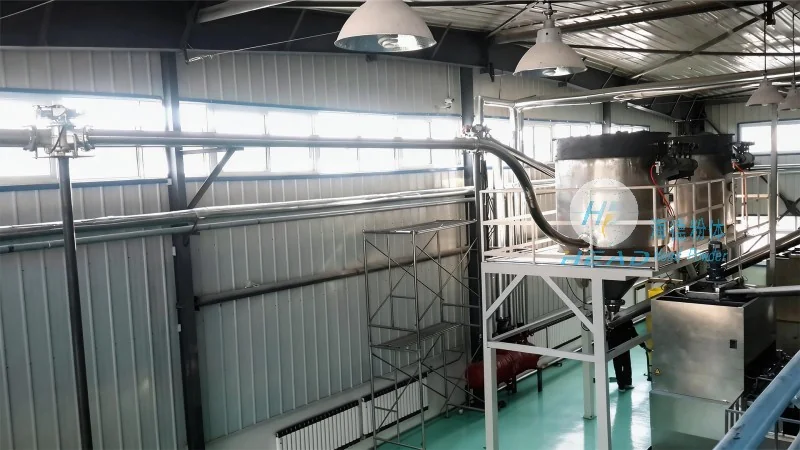
Gravity conveying systems utilize the natural force of gravity to move baking powder from one point to another. These systems typically consist of inclined chutes or troughs that allow the powder to flow downward under the influence of gravity. The primary advantage of gravity conveying is its simplicity and low energy consumption, as it does not require external power sources. This method is particularly effective for short horizontal or vertical distances and when the powder has good flowability. However, gravity systems are limited by the need for a suitable slope and may not be suitable for long distances or when the powder is prone to bridging or caking. They also require regular maintenance to prevent blockages and ensure smooth flow.
2. Mechanical Conveying Systems
Mechanical conveying systems employ mechanical components, such as screws, belts, or buckets, to transport baking powder. Screw conveyors, for example, use a rotating screw within a tube to move the powder forward. These systems offer high throughput and are suitable for a wide range of powder characteristics, including those with poor flowability or tendency to clog. The main advantage of mechanical conveyors is their ability to handle varying loads and maintain consistent flow rates. However, they require more maintenance than gravity systems and may generate more dust, which can affect product quality and safety. Additionally, the initial cost of mechanical conveyors is generally higher, and they may consume more energy compared to gravity systems.
3. Pneumatic Conveying Systems
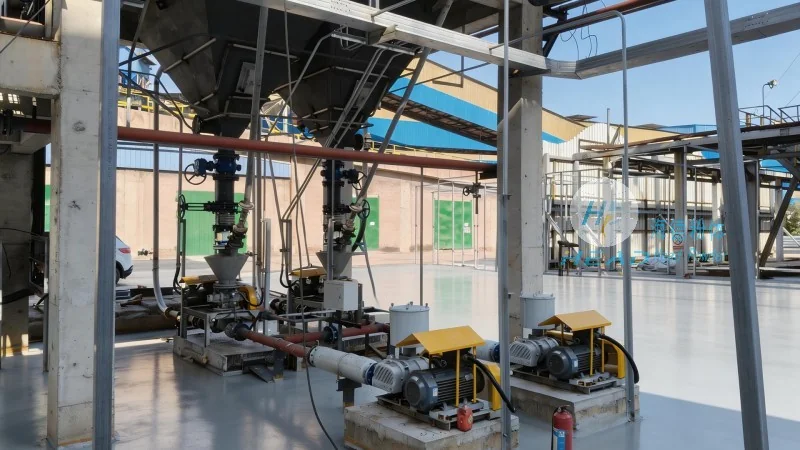
Pneumatic conveying systems use air pressure to transport baking powder through a pipeline. These systems can be either positive displacement or pressure type, depending on the application. Positive displacement systems use a pump to create a vacuum or pressure to move the powder, while pressure systems use compressed air to push the powder through the line. The primary advantage of pneumatic conveying is its ability to transport baking powder over long distances and to multiple destinations from a single source. It also allows for easy integration with other processing equipment and can handle powders with varying flow characteristics. However, pneumatic systems require more energy than gravity or mechanical systems and may be more complex to install and maintain. Additionally, they can generate more dust and require proper filtration to prevent product contamination.
4. Hydraulic Conveying Systems
Hydraulic conveying systems use a liquid medium, such as water or oil, to transport baking powder. The powder is mixed with the liquid and pumped through a pipeline, where it is separated from the liquid at the destination. This method is particularly effective for handling powders that are difficult to convey mechanically or pneumatically, such as those with high moisture content or tendency to clog. The main advantage of hydraulic systems is their ability to handle high volumes of powder and to transport it over long distances with minimal energy consumption. However, they require additional equipment for liquid separation and may be more expensive to install and maintain. Additionally, the use of liquid can pose environmental and safety concerns, and the system may require regular cleaning to prevent product buildup.
Advantages and Disadvantages Summary
Each conveying method has its own set of advantages and disadvantages, and the choice depends on the specific requirements of the baking powder handling application. Gravity systems are ideal for short distances and low-cost solutions, while mechanical systems offer high throughput and flexibility. Pneumatic systems are suitable for long-distance transport and multiple destinations, and hydraulic systems are effective for handling difficult-to-convey powders. It is crucial for manufacturers to evaluate their operational needs, budget constraints, and product characteristics to select the most appropriate conveying method.