

Comparison of Common Rare Earth Crystal Powder Conveying Methods: Advantages and Disadvantages
HeadPowder, a leading provider of advanced material solutions, specializes in the handling and processing of rare earth crystal powders. With a focus on efficiency and reliability, the company offers a range of conveying technologies tailored to the unique challenges of handling these specialized materials. This article provides a detailed comparison of common rare earth crystal powder conveying methods, highlighting their advantages and disadvantages to help industrial users make informed decisions.
About HeadPowder: Leading Rare Earth Crystal Powder Solutions
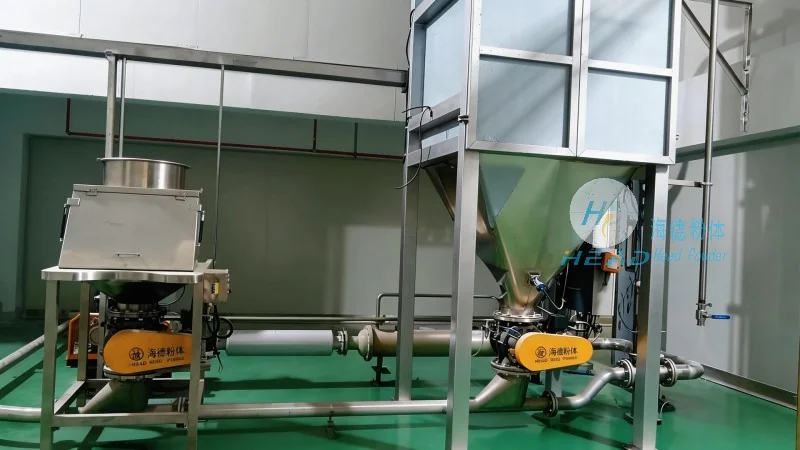
HeadPowder, or Shandong HeadPowder Engineering Co., Ltd., is headquartered in Shandong, China. The company has established itself as a trusted partner in the rare earth industry, offering comprehensive solutions for material handling, processing, and application. With years of experience and a commitment to innovation, HeadPowder delivers high-quality products and services that meet the stringent requirements of modern industrial applications.
Common Conveying Methods for Rare Earth Crystal Powders
When it comes to transporting rare earth crystal powders, selecting the right conveying method is critical to ensure product integrity, operational efficiency, and safety. Different industries and applications may require different approaches, and understanding the characteristics of each method is essential for optimal performance. Below is a comparison of several common conveying methods used in the handling of rare earth crystal powders.
Screw Conveyors: Advantages and Limitations
Screw conveyors, also known as auger conveyors, are widely used for the horizontal or slightly inclined transport of bulk materials, including rare earth crystal powders. These systems consist of a rotating screw (auger) inside a trough or tube, which moves material forward through the mechanism. One of the primary advantages of screw conveyors is their simplicity and low maintenance requirements. They are relatively inexpensive to install and operate, making them suitable for small to medium-scale operations. Additionally, screw conveyors can handle a wide range of particle sizes and can be easily integrated into existing processing lines.
However, screw conveyors have several limitations when used with rare earth crystal powders. The rotating screw can cause significant friction and heat generation, which may degrade the quality of heat-sensitive materials or cause oxidation. The design also limits the maximum particle size and can lead to blockages if the powder is too fine or has high moisture content. Furthermore, screw conveyors are not suitable for vertical transport or long-distance horizontal conveying, as they require steep inclines that may not be feasible in all applications.

Air-Pneumatic Conveying: Efficiency and Flexibility
Air-pneumatic conveying systems use compressed air to transport materials through a network of pipes. This method is particularly effective for rare earth crystal powders due to its ability to handle fine powders and minimize product contamination. The system typically consists of a hopper, a venturi or airlock, and a receiver, with the material being drawn into the pipe by the airflow. One of the key advantages of air-pneumatic conveying is its high efficiency, as it can transport materials over long distances with minimal energy consumption. The method also allows for the integration of multiple processing steps, such as mixing or drying, within the conveying line.
Despite these benefits, air-pneumatic conveying has its drawbacks. The system requires a reliable compressed air supply, which can increase operational costs and maintenance needs. Additionally, the high velocity of the air can cause particle attrition and degrade the material's quality, especially for brittle or sensitive rare earth compounds. The design also limits the maximum particle size and may not be suitable for very fine powders, as they can be easily carried away by the air stream without being effectively conveyed. Furthermore, the system can be susceptible to clogging if the powder is too cohesive or has high moisture content.
Vibrating Conveyors: Gentle Handling and Uniform Flow
Vibrating conveyors use mechanical vibrations to move materials along a trough or conveyor belt. This method is ideal for handling delicate or abrasive materials, such as rare earth crystal powders, as it minimizes friction and impact. The system typically consists of a trough supported by vibration motors, which create a sinusoidal motion to propel the material forward. One of the primary advantages of vibrating conveyors is their ability to handle a wide range of particle sizes and shapes, including fine powders and irregularly shaped crystals. The gentle motion also reduces product degradation and maintains the material's integrity, making it suitable for applications where quality is critical.
However, vibrating conveyors have some limitations. The system requires regular maintenance of the vibration motors and support structure, which can increase long-term costs. Additionally, the design may not be suitable for high-volume applications, as the conveying rate is generally lower compared to other methods. The system also has a limited vertical conveying capability and may not be effective for long horizontal distances, as the vibration can cause material to settle or segregate over time.
Bucket Elevators: Vertical Transport and High Capacity
Bucket elevators are used for vertical transport of bulk materials, including rare earth crystal powders, and are particularly effective for applications requiring high capacity and vertical movement. The system consists of a series of buckets attached to a belt or chain, which moves up and down inside a vertical housing. As the buckets ascend, they fill with material from a hopper at the bottom, and then discharge the material at the top. One of the main advantages of bucket elevators is their high capacity and ability to transport materials over significant vertical distances with minimal space requirements. The system is also relatively simple to operate and maintain, with few moving parts exposed to the material.
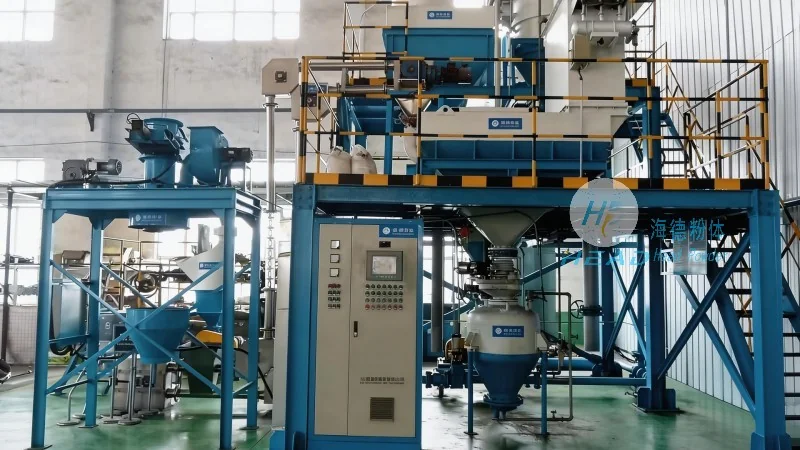
Despite these benefits, bucket elevators have their own limitations. The system is not suitable for horizontal or inclined transport and requires a vertical layout, which may not be feasible in all facilities. The design also limits the maximum particle size and can lead to blockages if the powder is too fine or has high moisture content. Additionally, the system can be noisy and may require additional dust control measures, as the vertical movement can generate significant dust. The maintenance of the buckets and drive system can also be more complex and costly compared to other conveying methods.
Selection Considerations for Rare Earth Crystal Powder Conveying
Choosing the right conveying method for rare earth crystal powders involves a careful evaluation of several factors, including material properties, application requirements, and operational constraints. The following considerations can help industrial users select the most appropriate method for their specific needs:
1. **Material Characteristics**: The size, shape, and moisture content of the rare earth crystal powder are critical factors. Fine powders or those with high moisture content may require air-pneumatic or vibrating conveyors to avoid clogging. Coarse or abrasive materials may be better suited for screw or bucket elevators.
2. **Conveying Distance and Layout**: The distance and layout of the processing line will determine the suitability of each method. For short horizontal distances, screw or vibrating conveyors may be sufficient. For long distances or vertical transport, bucket elevators or air-pneumatic systems are more appropriate.
3. **Product Integrity**: If the material is heat-sensitive or prone to degradation, vibrating conveyors or air-pneumatic systems with low velocity may be preferred to minimize friction and impact. For applications where product contamination is a concern, air-pneumatic systems can be enclosed to prevent dust exposure.
4. **Operational Costs**: The initial investment and long-term maintenance costs of each system should be considered. Screw conveyors are generally the most cost-effective option, while air-pneumatic systems may have higher operational costs due to compressed air usage.
Conclusion: Tailoring Conveying Solutions to Industrial Needs
Each conveying method for rare earth crystal powders has its own set of advantages and disadvantages, and the optimal choice depends on the specific requirements of the application. By understanding the characteristics of each method and considering factors such as material properties, conveying distance, and product integrity, industrial users can select the most suitable system to ensure efficient and reliable operation. HeadPowder, with its expertise in rare earth material handling, offers customized solutions that address the unique challenges of each application, helping clients achieve their operational goals while maintaining product quality and safety.