Công ty TNHH Kỹ thuật Headpowder Sơn Đông chuyên vận chuyển khí nén bột và hạt. Nhờ thế mạnh hợp tác doanh nghiệp‑trường‑viện, chúng tôi cung cấp giải pháp vận chuyển kín, không bụi, độ chính xác cao.
Rice husk powder, a byproduct of rice processing, is widely used in power generation, biofuel production, and other industrial applications. However, its light weight and tendency to become airborne pose significant challenges for traditional material handling. Conventional methods like gravity flow or mechanical conveyors often struggle with dust generation, material loss, and operational inefficiencies. This article explores common rice husk powder conveying methods and highlights the advantages of HeadPowder's pneumatic conveying solutions.
Common Conveying Methods for Rice Husk Powder

Several approaches are typically employed to transport rice husk powder, each with its own set of advantages and limitations. The choice of method often depends on factors such as material characteristics, distance, and environmental requirements.
1. Gravity Conveying: This method relies on the natural slope of the material to move it from a higher to a lower elevation. While simple and low-cost, gravity systems are limited by the need for a steep incline and are unsuitable for long horizontal distances or vertical lifts. They also generate dust and may result in material degradation due to prolonged exposure.
2. Mechanical Conveying: Mechanical systems, including belt conveyors, screw conveyors, and bucket elevators, are widely used for bulk material handling. Belt conveyors are effective for horizontal and slight incline transport but can cause material breakage and are prone to dust leakage. Screw conveyors are compact and suitable for vertical or horizontal transport but may suffer from clogging and material degradation, especially with fibrous or abrasive materials like rice husk powder.
3. Pneumatic Conveying: Pneumatic systems use air to transport material through a pipeline. They can be categorized into positive pressure (blower-driven) and negative pressure (vacuum-driven) systems. Pneumatic conveying offers advantages such as high efficiency, minimal material loss, and the ability to handle fine powders without clogging. However, traditional pneumatic systems may have limitations in terms of pressure drop, energy consumption, and maintenance.
HeadPowder's Pneumatic Conveying System: Advantages and Features
HeadPowder, a leading provider of material handling solutions, specializes in developing advanced pneumatic conveying systems tailored for rice husk powder applications. The company's solutions are designed to address the unique challenges of handling this light, dusty material while ensuring operational efficiency and environmental compliance.
Key advantages of HeadPowder's pneumatic conveying system include:
Efficient Material Transport: The system utilizes optimized air flow and pressure control to ensure consistent and reliable transport of rice husk powder over long distances and vertical lifts. This minimizes material loss and ensures a steady supply to downstream processes.
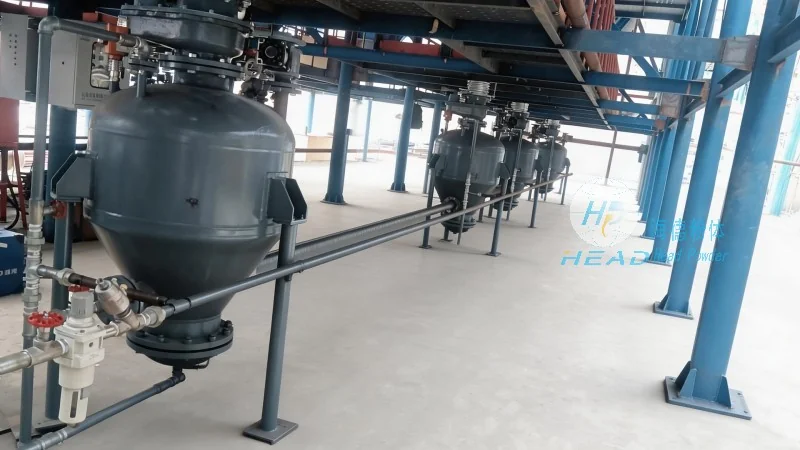
Low Dust Generation: Advanced filtration and sealing technologies reduce dust emissions, improving workplace safety and environmental protection. This is particularly important for rice husk powder, which can be a respiratory irritant.
Energy Efficiency: HeadPowder's systems are engineered to minimize energy consumption through efficient blower selection and optimized air-to-solid ratios. This reduces operational costs and environmental impact.
Adaptability: The system can be customized to accommodate varying material characteristics, flow rates, and process requirements. It supports both positive and negative pressure modes, allowing flexibility in different application scenarios.
Easy Maintenance: Modular design and robust components simplify maintenance and reduce downtime. The system is built with durable materials to withstand the abrasive nature of rice husk powder.
Technical features of HeadPowder's pneumatic conveying system include:
High-Pressure Blowers: Equipped with high-efficiency, low-noise blowers that provide consistent air pressure and flow, ensuring reliable material transport.
Pipeline Design: Custom-designed pipelines with smooth interiors and appropriate diameters minimize pressure drop and reduce energy consumption. The system includes features like pulse-jetting for cleaning and preventing material buildup.
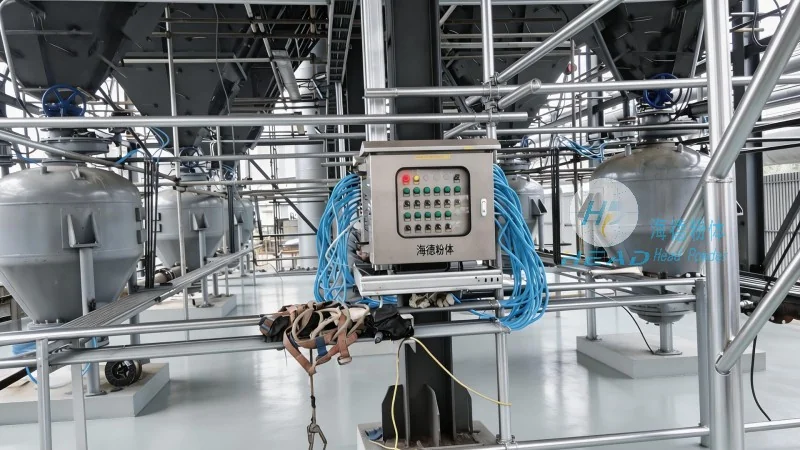
Control Systems: Advanced control panels allow for real-time monitoring and adjustment of air pressure, flow rate, and material feed. This ensures optimal performance and prevents system overload.
Filtration and Dust Collection: Integrated dust collection systems with high-efficiency filters capture fine particles, reducing emissions and protecting the environment. The system can be connected to existing dust control infrastructure for comprehensive environmental management.
Application Examples and Benefits
HeadPowder's pneumatic conveying systems have been successfully implemented in various industrial settings, including power plants, biomass energy facilities, and agricultural processing plants. The benefits observed in these applications include:
1. Increased Productivity: By eliminating material loss and ensuring consistent feed rates, the system improves the efficiency of downstream processes, such as combustion or pelletization.
2. Reduced Maintenance Costs: The robust design and easy maintenance features reduce the frequency and cost of system repairs, leading to lower total cost of ownership.
3. Enhanced Safety: Lower dust emissions and enclosed system design minimize the risk of respiratory issues and other health hazards for workers.
4. Environmental Compliance: The system's low emissions and efficient operation help facilities meet environmental regulations and reduce their carbon footprint.

 Shandong Headpowder Engineering Co., Ltd.
 156-6277-7102(Quản lý Trương)
  0531-83386006
  Thành phố Tế Nam, Tỉnh Sơn Đông, Trung Quốc
Điện thoại
WeChatTư vấn
Lên đầu