

Comparison of Common Resin Pellet Conveying Methods: Advantages and Disadvantages
Resin pellet conveying is a critical process in the manufacturing and processing of resin materials, ensuring efficient material handling from storage to production lines. The choice of conveying method significantly impacts operational efficiency, cost, and product quality. This article provides a detailed comparison of common resin pellet conveying methods, highlighting their advantages and disadvantages to help industrial operators make informed decisions.
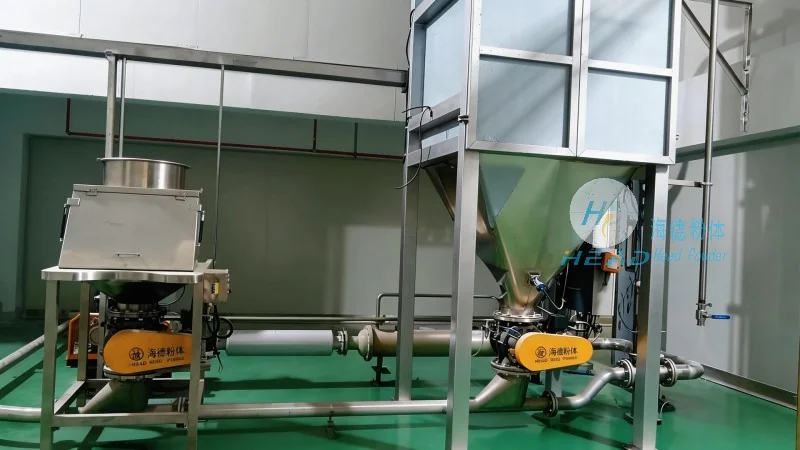
Introduction to Resin Pellet Conveying Methods
Resin pellets, also known as resin beads or granules, are widely used in various industries including plastics, coatings, and adhesives. Efficient and reliable conveying of these pellets is essential to maintain production continuity and minimize downtime. Different conveying methods are employed based on factors such as material properties, production scale, and environmental considerations. The primary methods include screw conveyors, pneumatic conveyors, belt conveyors, and bucket elevators. Each method has unique characteristics that make it suitable for specific applications.
Screw Conveyors: Advantages and Disadvantages
Screw conveyors, also known as auger conveyors, are among the most common equipment for resin pellet handling. They consist of a rotating screw (auger) inside a U-shaped or tubular housing. The screw rotates, pushing the resin pellets forward through the housing. This method is particularly effective for horizontal or slightly inclined transport of resin pellets. The advantages of screw conveyors include:
Simple and robust design, requiring minimal maintenance.
Capable of handling a wide range of resin pellet sizes and types.
Can be easily integrated into existing production lines.
Low power consumption compared to other methods.
However, screw conveyors also have several disadvantages. They are not suitable for vertical transport due to the risk of material clogging or the need for high torque. Additionally, they may not be efficient for transporting abrasive resin pellets, as the screw and housing can wear out quickly. Moreover, the design limits the conveying distance, typically up to 30 meters horizontally.
Pneumatic Conveyors: Advantages and Disadvantages
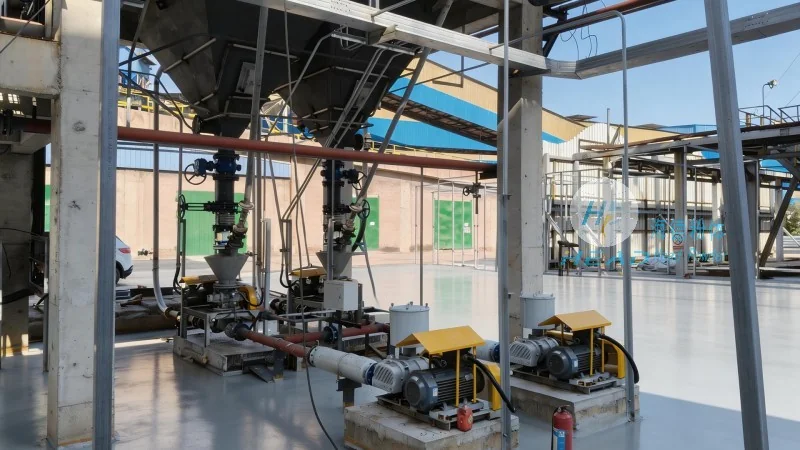
Pneumatic conveyors use air or gas to transport resin pellets through a pipeline system. These systems can be classified as pressure or vacuum types. Pressure conveyors use compressed air to push the pellets forward, while vacuum conveyors use suction to draw the material. Pneumatic conveyors are ideal for long-distance transport and can handle both horizontal and vertical movement. The advantages of pneumatic conveyors include:
Ability to transport resin pellets over long distances, up to several hundred meters.
Effective for both bulk and small particle sizes.
Can be used for both horizontal and vertical transport without the need for additional equipment.
Provides a closed system, reducing dust and contamination.
Nevertheless, pneumatic conveyors have notable drawbacks. They require significant energy input due to the need for compressed air, leading to higher operational costs. The system is also more complex, involving air compressors, filters, and control valves. Additionally, abrasive resin pellets can cause wear on the pipeline and components, reducing the lifespan of the equipment. Moreover, the system may be susceptible to blockages if the pellets are too large or have high moisture content.
Belt Conveyors: Advantages and Disadvantages
Belt conveyors use a continuous belt to transport resin pellets. The belt is supported by rollers and driven by a motor, moving the pellets along the conveyor path. This method is commonly used in bulk material handling and is suitable for both horizontal and inclined transport. The advantages of belt conveyors include:
High capacity and continuous operation, making them suitable for large-scale production.
Low maintenance costs as the belt and rollers are relatively simple components.
Can handle a wide range of resin pellet sizes and shapes.
Easy to install and integrate into existing facilities.
However, belt conveyors also have limitations. They are not suitable for vertical transport due to the risk of material slipping or the need for steep inclines. The system requires regular cleaning to prevent resin pellet buildup on the belt, which can affect performance. Additionally, the belt may stretch over time, requiring periodic replacement. Moreover, belt conveyors are more expensive to install compared to screw or pneumatic systems, especially for long distances.
Bucket Elevators: Advantages and Disadvantages
Bucket elevators are vertical conveyors that use a chain or belt with attached buckets to lift resin pellets from a lower to a higher level. The buckets are filled at the bottom and emptied at the top as the conveyor moves. This method is ideal for vertical transport of resin pellets and can be integrated with horizontal sections. The advantages of bucket elevators include: